Senior Dog Age Calculator: Your Guide
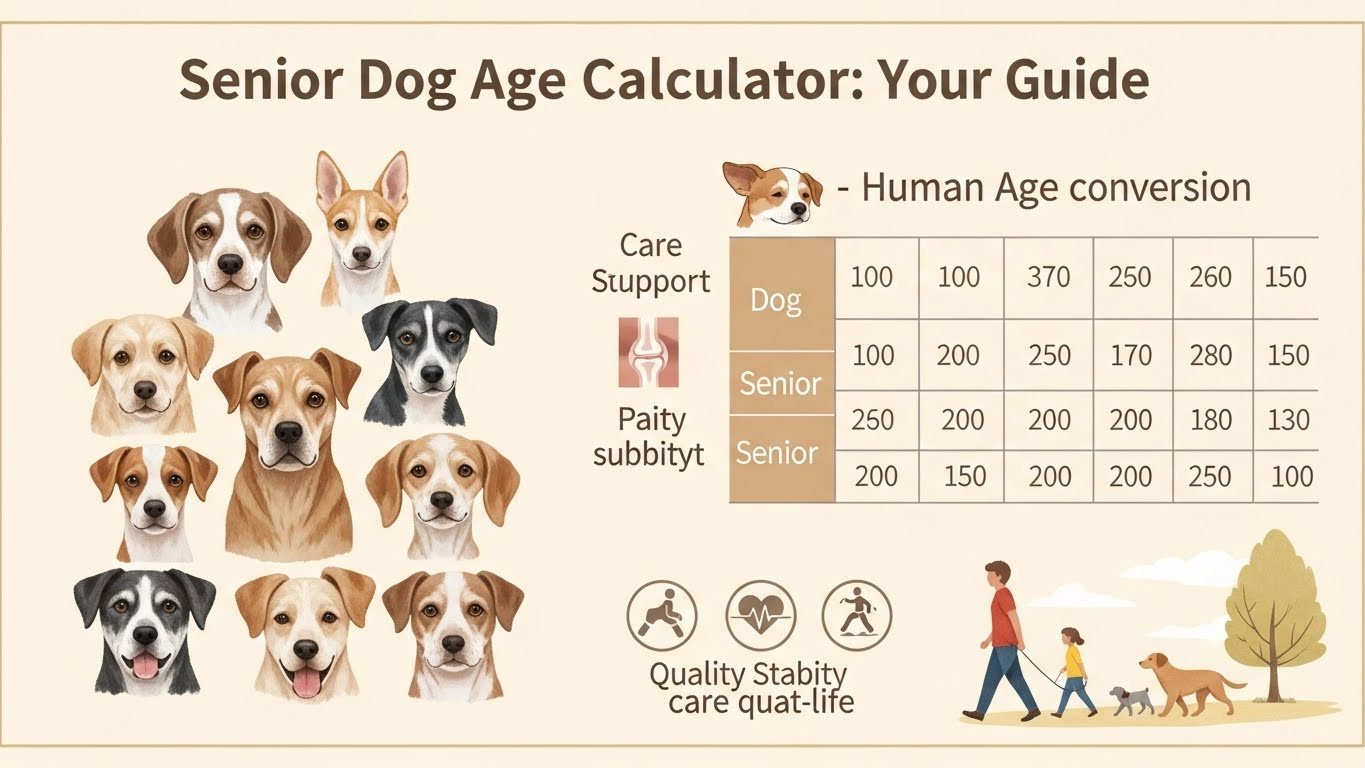
The Real Age of Your Senior Dog
It is no longer possible to multiply your dog's age by 7 to estimate its age. This rule has been replaced with newer, more sensitive methods that account for the fact that dogs do not age at the same rate, depending on their size, breed, and life stage. For older dogs, in particular, it is essential to know their actual biological age to provide the best care in their mature years. I have spent much of my life in the company of older dogs and their owners, and I have witnessed firsthand how knowing a dog's actual age helps individuals make better decisions about nutrition, exercise, and medical care.
Different breeds do not reach senior age at the same time; therefore, when you know your companion has crossed the line, you can adjust their lifestyle in advance. A dog ageing calculator provides a more realistic view of the dog's life cycle by modelling faster age growth in the early years and using more precise formulae in later life.
When is a Dog old enough to be called a Senior?
When your dog ages, the process is sporadic and varies widely by size and breed. Small dogs tend not to become seniors until they are about ten or eleven years, medium breeds become seniors when they are about eight or nine, but large and giant breeds can be seniors as young as five or six years. This difference is explained by the fact that large dogs age biologically more quickly and experience age-associated health problems earlier.
I recall an interview with a Saint Bernard owner who was appalled to learn that her five-year-old dog was entering senior age, while her neighbouring Dachshund was only eight years old and just entering senior age. Veterinary associations have also defined senior status as the age at which dogs typically develop age-related conditions that require various healthcare interventions.
According to the American Animal Hospital Association, dogs are considered seniors when they have reached about three-quarters of their expected lifespan. The framework helps veterinarians and owners anticipate evolving needs with age, including the need for joint supplements and more frequent health screenings. Knowing this schedule helps one avoid the pitfall of treating older dogs as if they have not yet left their youth.
The Operation of Calculators of the Modern Age
Current age calculators for senior dogs are complex and account for the dog's ageing and development. Most existing calculators recognise that a dog's first year is a period of rapid growth and maturation, comparable to 15 years in humans. The second year will add an estimated nine years, making a two-year-old dog about twenty-four years old in human terms.
Then it becomes size-dependent and computationally more expensive. For senior dogs, the number of years per year added to their age is 4 to 6 human years, depending on size category. Smaller senior dogs contribute fewer years than larger seniors. Other supercomputers include the DNA methylation studies at UC San Diego, which found that dog ageing is logarithmic, but the computations can be highly technical.
A good approximation can be obtained by entering your dog's age, weight, and breed into a reputable calculator. The calculator I recommend to most people subdivides dogs into at least four size groups and explains how it works, so people can see how the numbers are derived scientifically.
Why Precise Age is Important to Old Dogs
Being aware of your senior dog's biological age will directly affect the quality of care you provide during their most vulnerable years. Once you realise that your nine-year-old Labrador Retriever is somewhere over sixty-three years old in human years, you will treat their healthcare very differently than when you consider them to be middle-aged.
This information informs choices regarding vaccination protocols, cancer screenings, and the frequency of dental care. I have dealt with owners who postponed required interventions because they did not realise their dog's actual age, and they had more time than they thought. On the other hand, some owners are overly cautious and limit activities evenn when their senior dog remains healthy and derives value from regular exercise.
Age calculation helps strike an appropriate balance between security and quality of life. The insurance factor also applies: some insurance policies impose age restrictions or higher premiums on older dogs, so accurate age assessment is economically essential. Also, knowing the ageing schedule would help with emotional preparation for the tough decisions that are inevitable when caring for ageing pets.
Some of the typical health problems of elderly dogs
Older dogs have predictable health issues, and the age calculator can help put them in context. Most older dogs, especially larger dogs, are susceptible to arthritis and joint disease, which cause pain, limit mobility, and can only be managed with medications, supplements, and lifestyle changes.
The syndrome is actually dementia in dogs, which is known as cognitive dysfunction syndrome, and develops in a considerable percentage of the dogs more than ten years old; it causes confusion, changes in sleep patterns, and changes in behaviour. Dental disease progresses with age and may require more frequent professional cleaning and extractions to prevent systemic infections.
There is an increase in heart diseases, particularly in some breeds that are prone to heart diseases. The natural state of kidney function deteriorates with age and may require dietary changes and blood analysis. Cancer cases among older dogs are high; therefore, close attention should be paid to lumps, bumps, and changes in behaviour.
I have already realised that owners who know their dog's biological age can diagnose these illnesses earlier by observing age-related issues. Gradual loss of vision and hearing requires environmental accommodations and patience, as dogs must adapt to sensory changes that alter how they relate to their surroundings.
Ages of Care of Your Senior Dog
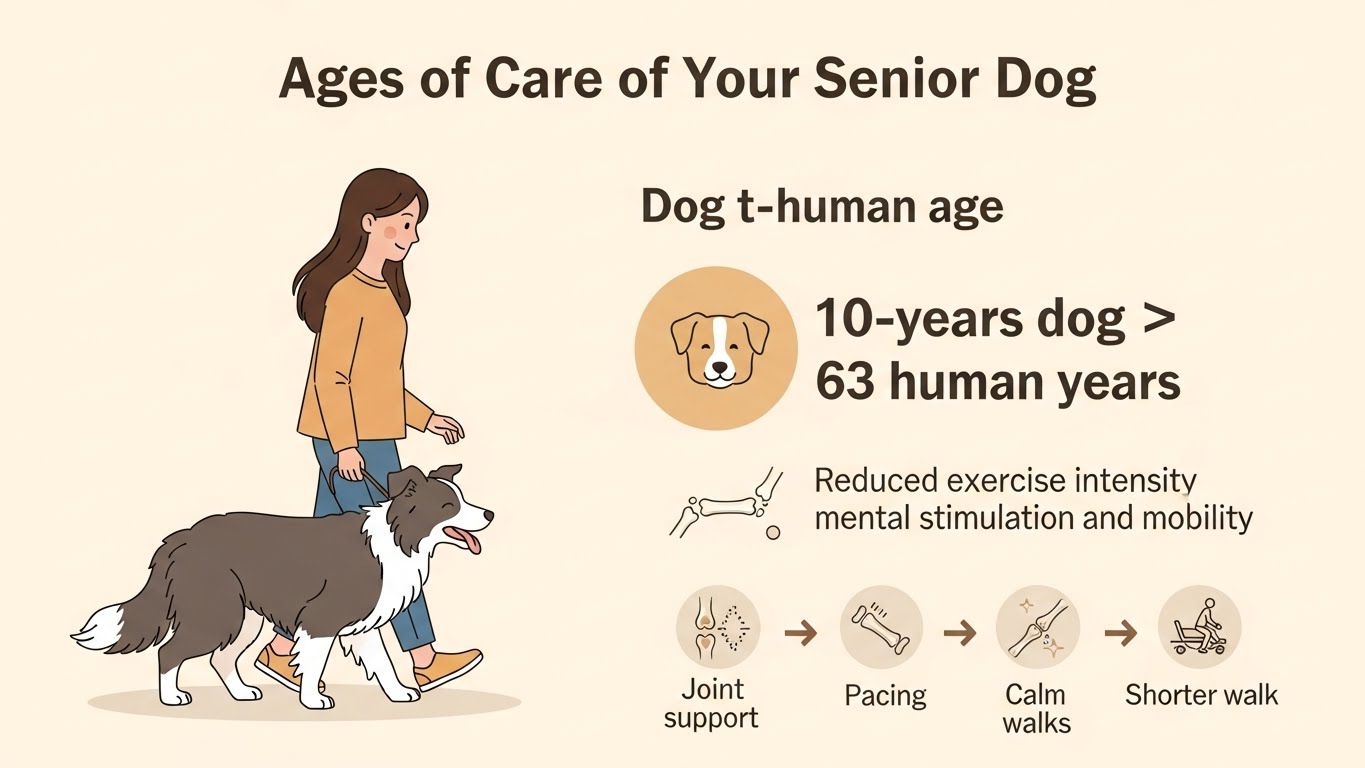
After determining your dog's age, you can provide appropriate care based on their biological needs. The physical demands of exercise vary significantly; although movement is essential for keeping the muscles and the mind healthy, the intensity and duration should be reduced. A Border Collie that is approximately sixty-three years old, that is, biologically a ten-year-old, does not need as intense and vigorous activities as their younger version did.
Rigorous running and jumping are usually substituted by swimming and slow walking. Nutrition is becoming increasingly crucial as metabolism declines and nutritional needs change. The majority of older dogs benefit from controlled-calorie diets to prevent obesity, joint supplements to support mobility, increased fibre to promote a healthy digestive system, and antioxidants to support cognitive function.
Consult a veterinarian about dietary changes rather than assuming age is the cause. Even comfort measures are considered: an orthopaedic bed is soothing for arthritic joints, a ramp helps avoid jumping, and raised food bowls can alleviate neck and back strain. Even when physical abilities wane, mental stimulation is essential. The use of puzzle toys, light training, and scent work helps keep older adults' minds active and slows the progressive cognitive decline associated with biological ageing.
Old Dog Veterinary Care Schedules
The frequency of veterinary care should increase with dogs' biological age, as calculated from their age. While adult dogs can comfortably go to the vet once a year, older dogs may benefit from being seen by a veterinarian every six months. With more frequent checkups, veterinarians can detect emerging issues early, when they are easier to address.
Bloodwork is now a routine part of senior visits, during which baseline values are established, and changes in organ function are monitored. Complete blood counts, chemistry, and urinalysis yield vital data on kidney function, liver function, blood glucose, and hydration status.
I have witnessed numerous instances in which routine blood work for older people detected conditions that could be treated before the onset of symptoms, thereby prolonging life and quality of life. Dental check-ups are essential because oral health directly influences overall health; infected teeth can spread bacteria throughout the body and affect the heart valves and other organs.
Blood pressure monitoring should begin in older dogs, as hypertension is common and treatable. Veterinarians recommend baseline cardiac ultrasound in breeds prone to heart disease and repeat testing if murmurs develop. These preventive measures are expensive upfront, but they typically yield substantial savings compared with treating advanced disease detected too late.
Calculating Age: How to Make the most of it
To have the best possible results of a senior dog age calculator, you will be required to provide specific details about your pet. Begin with their actual age in years and months; accuracy is more important as they age and time is running out. Now you should know your dog's primary breed, since this is a key factor in the computation.
Weight group is a significant factor; therefore, a dog's current weight matters: a fifty-pound dog is not going to age the same as a hundred-pound dog of the same breed. Other sophisticated calculators require the user's health status, activity level, and body condition score, further narrowing the estimate beyond simple formulas. When using online calculators, recommend testing two or three reliable calculators and comparing results rather than relying on a single one. Find calculators with references to veterinary research or created by veterinary institutions, not generic tools that lack transparent methodologies.
It should be borne in mind that these calculators are estimates according to averages; your personal dog might become older or older faster or slower due to your genetics, previous care, and health condition. This calculated age is a guideline for communicating with your veterinarian, who can determine your dog's biological age by examining it and potentially running diagnostic tests.
Indications Your Dog Is Growing Older Than It Should
In other cases, a senior dog's biological age may exceed its chronological age, because simple calculators based on chronological age alone can underestimate it. There are also warning signs of accelerated ageing that the veterinarian needs to address. A change in dramatic weight, whether weight loss or weight gain, without an alteration in diet, can indicate metabolic disorders or disease mechanisms.
Increased thirst and urination beyond those that occur with age could indicate kidney disease, diabetes, or hormonal imbalances. Drastic changes in behaviour, such as anxiety, aggression or withdrawal, frequently indicate pain or cognitive impairment other than normal ageing. Increasing hardness, chronic limping, or aversion to taking the stairs indicate a faster-than-anticipated progression of joint disease.
Persistent coughing, particularly at night or during excitement, may indicate cardiac issues that develop earlier than expected. Confusion, wandering, or being stuck in corners are signs of cognitive dysfunction that show earlier than the breed average.
I was with a seven-year-old Golden Retriever that displayed all the characteristics of a dog many years older; diagnostics showed an early kidney disease and arthritis, which had to be treated with aggressiveness. Such instances remind us that calculators are guidelines, not absolute rules, and that personal health takes precedence over the statistical average in care decisions.
The Psychological Side of Old Dog Ageing
Knowing your old dog's age is both an emotional and a practical advantage. The fact that the companion is ageing faster than they expected is something most owners find hard to accept. Seemingly human years of seventy or eighty years determine a realised mortality.
I have sat in many owners' offices, espousing this information, sometimes wept, always bearing the burden of imminent loss. But sound knowledge of age also makes the right action an alternative to consider for most of the remaining time. Such a change in outlook will make owners more focused on comfort, aggressive pain management, and exceptional experiences while their dog is still enjoying them.
The owners also find it helpful to think in terms of good days rather than years to go; when a good day comes, it is a victory to celebrate. Emotional preparation that involves ageing timelines can alleviate shock and trauma when end-of-life decisions are difficult. It is also comforting to know that you have provided age-appropriate care during your dog's senior years, which will help you avoid regret, which is especially crucial when facing a loss.
How to Get the most out of your Senior Dog
After you have determined that your dog is a senior, the real task begins: making their remaining time as comfortable and happy as possible. The management of pain should be given priority; chronic pain significantly reduces the quality of life, but most owners do not take the pain of their dog seriously, since it is an instinct in the dog to conceal pain.
By collaborating with your veterinarian to adopt multimodal pain management in the form of medications, supplements, acupuncture and physical therapy, you can change the day of a senior dog. The environmental changes are more significant than owners realise. The simplest modifications, such as non-slip carpets on the floor, nightlights for dogs with poor vision, and baby gates to block stairs, can help prevent injuries and reduce anxiety.
Routine helps keep older dogs secure, because they mostly dislike change. Regular feeding and walking times, along with a clear daily schedule, help alleviate stress. Social networks also play a role despite the diminishing physical capabilities. Ongoing communication with family, light play with compatible dogs, and visits to preferred destinations are invaluable because they stimulate the mind and bring fulfilment.
Frequently Asked Questions
At what age is a dog considered senior?
Dogs become seniors at different ages based on size: small breeds around ten to eleven years, medium breeds at eight to nine years, and large breeds as early as six to seven years old.
How accurate are online senior dog age calculators?
Quality calculators based on current veterinary research provide valid estimates within a reasonable range, though individual health factors can lead to variation from the calculated results.
Should I change my senior dog's food based on their age?
Most senior dogs benefit from age-appropriate nutrition around six to eight years old, but consult your veterinarian to determine the proper timing based on your specific dog's health.
How often should senior dogs see the veterinarian?
Senior dogs should have veterinary examinations every six months rather than annually, with bloodwork and other diagnostics to catch age-related problems early.
Can anything slow down my dog's ageing process?
While ageing is inevitable, maintaining a healthy weight, engaging in appropriate exercise, ensuring adequate nutrition, and proactively managing health conditions can optimise lifespan and quality of life.
Calculate Your Senior Dog's Real Age
Use our advanced dog age calculator to determine your senior dog's biological age and get personalized care recommendations.
Try Our Dog Age Calculator