Large Dog Age Calculator: The Ultimate Guide
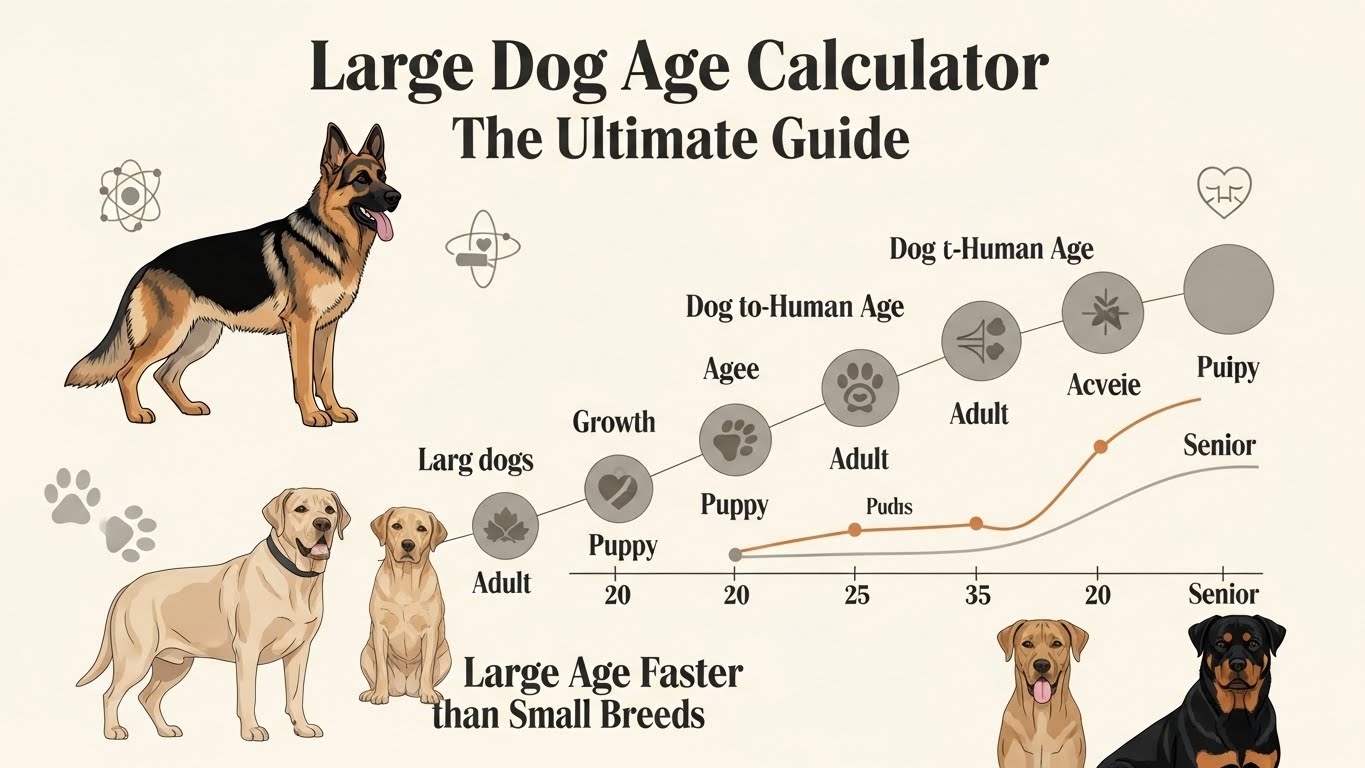
The conventional wisdom is that a human year is equivalent to 7 dog years. It is a simple formula shared across generations. Yet recent studies and veterinary science have demonstrated that determining a dog's age is more complex, particularly for larger breeds.
The ageing of large dogs is less typical than that of smaller dogs because they age more rapidly; accurate information is necessary to provide appropriate care. As someone who has worked for years with various dog breeds and consulted veterinarians, I have learned that it is possible to predict a large dog's health problems, modify its diet, and exercise it based on the animal's biological age rather than its chronological age.
The thing is that the first year of life of a Great Dane is much more ageing than the first year of life of a Chihuahua. This disparity worsens with maturation; therefore, breed-specific calculations are fundamental to responsible pet ownership.
The reasons for differences in ageing between large and small dogs
The correlation between body size and lifespan in dogs is one of the intriguing contradictions in nature. In the wild, larger animals have longer lifespans than smaller animals, but domestic dogs reverse that pattern. A Mastiff may live up to eight or ten years, but a Yorkshire Terrier can live up to fifteen years or beyond.
A report by veterinary scientists indicates that cellular ageing and age-related diseases occur earlier in large dogs. Their organs must work harder to maintain body mass, and growth spurts during the puppy stage impose an enormous burden on developing systems.
I have personally observed this in my clients' dogs: a seven-year-old Rottweiler shows more signs of ageing than a seven-year-old Beagle. The American Kennel Club and veterinary associations have now recognised that weight and breed size should be considered in any age calculation, leading to more complex formulas than the previous seven-year rule.
The Age of Large Dogs: The Modern Method of Calculation
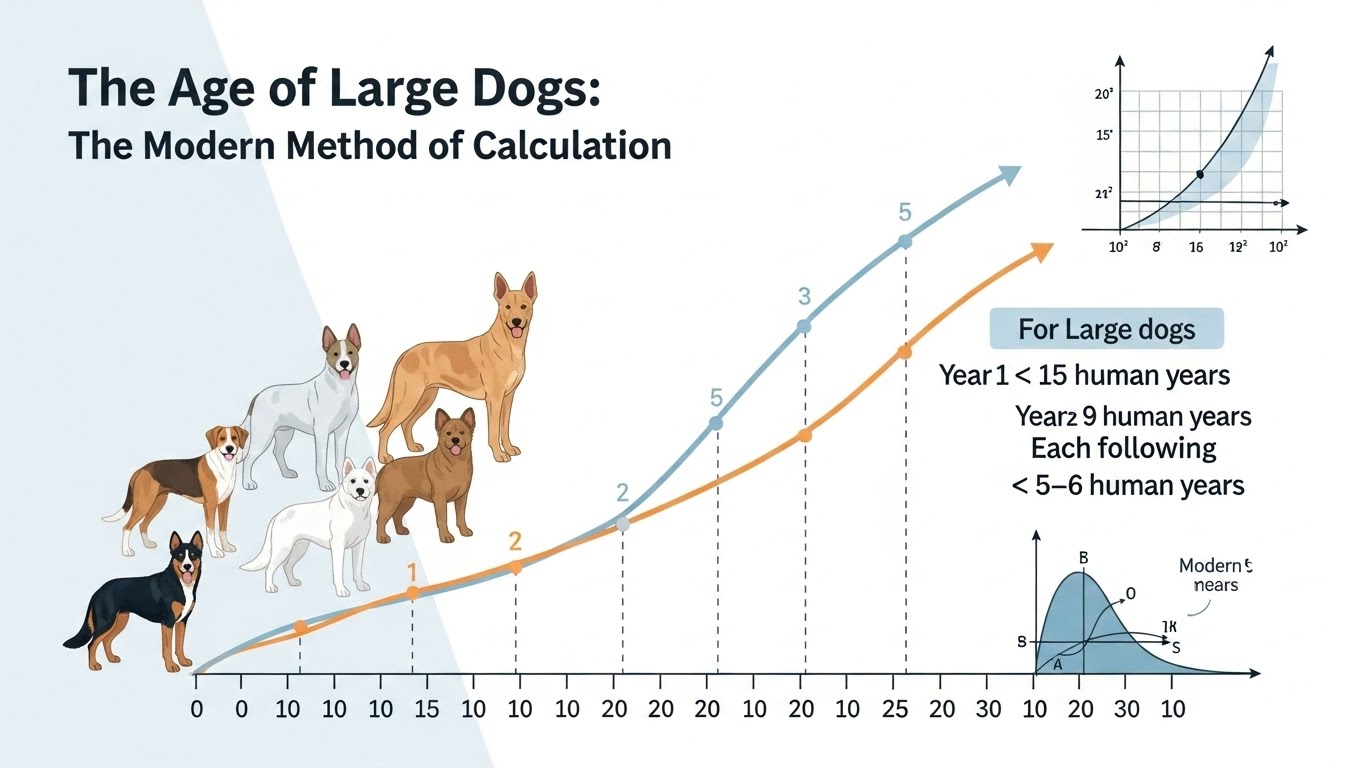
The currently most precise method for calculating dog age is a logarithmic formula that accounts for rapid early growth followed by a subsequent decrease in age-related growth rates. For large dogs, the first year is approximately 15 years of a human life, the second year is another 9 years, and the remaining years are about 5 or 6 years.
This is a more biological approach to calculation, as dogs do not develop and age uniformly. The German shepherd, at two years old, is physically and mentally fully mature, equivalent to a twenty-four-year-old human being, rather than fourteen, as the old formula had indicated.
At the University of California, San Diego, veterinary scholars developed an even more precise formula based on DNA methylation patterns, but it entails complex computations. In practice, the modified formula provides sufficient precision to inform health decisions for owners of large-breed dogs. I have observed that this method is highly effective for the health markers and behaviours I can track in large dogs across their life stages.
Deconstruction of the Lifecycle of Large Dogs
Large dogs undergo various life stages at different rates than small dogs; therefore, age computation is not simply a number. Large breeds take up to eighteen months to reach puppyhood because their longer bodies require more time for bones and joints to develop. During this period of puppyhood, feeding and exercise should be closely monitored to prevent developmental orthopaedic diseases.
Large dogs are generally in their adult stage between two and six years old, during which they are in optimal body condition. The onset of senior status in large breeds typically occurs between six and seven years of age, when a Golden Retriever or Labrador begins to exhibit minor signs of ageing that may require dietary modifications and joint supplements.
Large breeds such as Great Danes age more rapidly, reaching old age as early as five. I have had many large-breed owners visit me who mistakenly believed their six-year-old dogs were entering their middle-aged years, when in fact they were entering their golden years, and who had no opportunity to receive the preventive care that would have helped them live longer.
Health Consequences of Learning the Real Age of Your Large Dog
This is because knowledge of a large dog's biological age directly influences healthcare decisions and quality of life. Upon realising that your five-year-old Bernese Mountain Dog is around forty years in human terms, you will take cancer check-ups and heart check-ups more seriously. Megafauna are much more susceptible to age-related conditions, such as hip dysplasia, bloat, arthritis, and certain cancers, than smaller dogs.
Awareness of the actual age can help schedule these preventive activities. I have observed numerous instances of successful early intervention, guided by age-appropriate evaluations, in which a dog's active life was significantly prolonged. Recommendations for blood work vary by life stage; older large dogs should receive a twofold complete panel instead of yearly examinations.
The weight process is especially critical when large dogs age, as excess weight exacerbates already stressed joints. Dental care is provided according to age, and older large dogs require more frequent dental visits to prevent systemic infections. Financial planning should not be ignored, as understanding your dog's age trajectory is essential to anticipate the veterinary costs that accompany old age.
Factors Which Determine the rate at which different individuals age
Although breed size is the primary determinant of age, idiosyncratic factors can introduce variation that should be accounted for by the owner. The role of genetics is immense; dogs from breeds with a history of long lifespan are more likely to live longer than breed averages, whereas dogs from poorly bred lines may age earlier than the breed average. Life-long nutrition has a strong influence on age-related processes, cellular health, and slower cognitive decline in well-fed dogs.
Over the years, I have observed that dogs kept at lean body weight always show younger biological markers than their overweight siblings of the same chronological age. Exercise patterns are significant; appropriate exercise preserves muscle mass, joint flexibility, and cognition by slowing the ageing process.
Environmental stressors, including chronic stress, adverse living conditions, and inappropriate socialisation, accelerate the ageing process at the cellular level. The history of healthcare cannot be ignored; dogs that are in control of their chronic diseases age successfully, compared with those with unmanaged conditions.
The timing of spaying and neutering also influences ageing, and recent studies suggest that early neutering and spaying in large breeds, but not other breeds, may affect lifespan; however, this remains a complex and somewhat disputed area within the veterinary community.
Applying Age Calculators as Work Tools
Many web-based large-dog age calculators have been modified to incorporate breed-specific data to provide more accurate approximations. These applications require only that you enter your dog's actual age and either the breed or the weight range, after which you can use the relevant formulas. Other sophisticated calculators require additional questions about the health condition, body condition, and level of activity to produce more precise estimates.
Though convenient, such calculators are used as a rule of thumb rather than for exact measurements. To obtain more accurate results, I recommend using multiple calculators and comparing results across the various formulas and data sources employed by these tools. The most appropriate calculators describe their development and cite veterinary research supporting their reliability.
These tools are used to estimate your dog's average biological age; your dog may differ based on the factors discussed above. Calculators have helped explain to new owners of large breeds that their three-year-old dog is not a teenager. They should therefore not be treated as a single category, thereby prompting them to consider the appropriate age at which to care for their pet. These tools will serve as talking points with veterinarians, enabling them to provide personalised ageing assessments based on physical examination and testing.
Ageing Signs of Behavioural Change in Large Dogs
Age-related changes in behaviour make it easy to confirm what age calculators indicate about your large dog's life stage. Hypoactivity may manifest slowly: a Labrador that used to play fetch an hour earlier may become fatigued after two hours. There is a change in sleeping habits, with older large dogs sleeping more deeply and for more extended periods, up to 16 hours per day.
Drastic changes observed in older large dogs include confusion, altered sleep-wake patterns, reduced association with family members, and, at times, accidents during house-training. Auditory and visual impairments can manifest as a loss of the ability to respond to known instructions or as increased jumping.
Changes in appetite can be positive or negative: some dogs may become more selective as they age, while others may gain weight due to limited activity. I observed that big-breed owners sometimes attribute the same changes to stubbornness or destructive behaviour, when in fact they are indicators of ageing that require empathetic interventions.
Sometimes the anxiety level increases with age, especially the separation anxiety, and the dogs lose confidence in their developing capabilities. Observing these behavioural indicators, along with the age computed, provides a comprehensive picture of your dog's position in the life cycle.
Nutritional Modifications by Life Stage
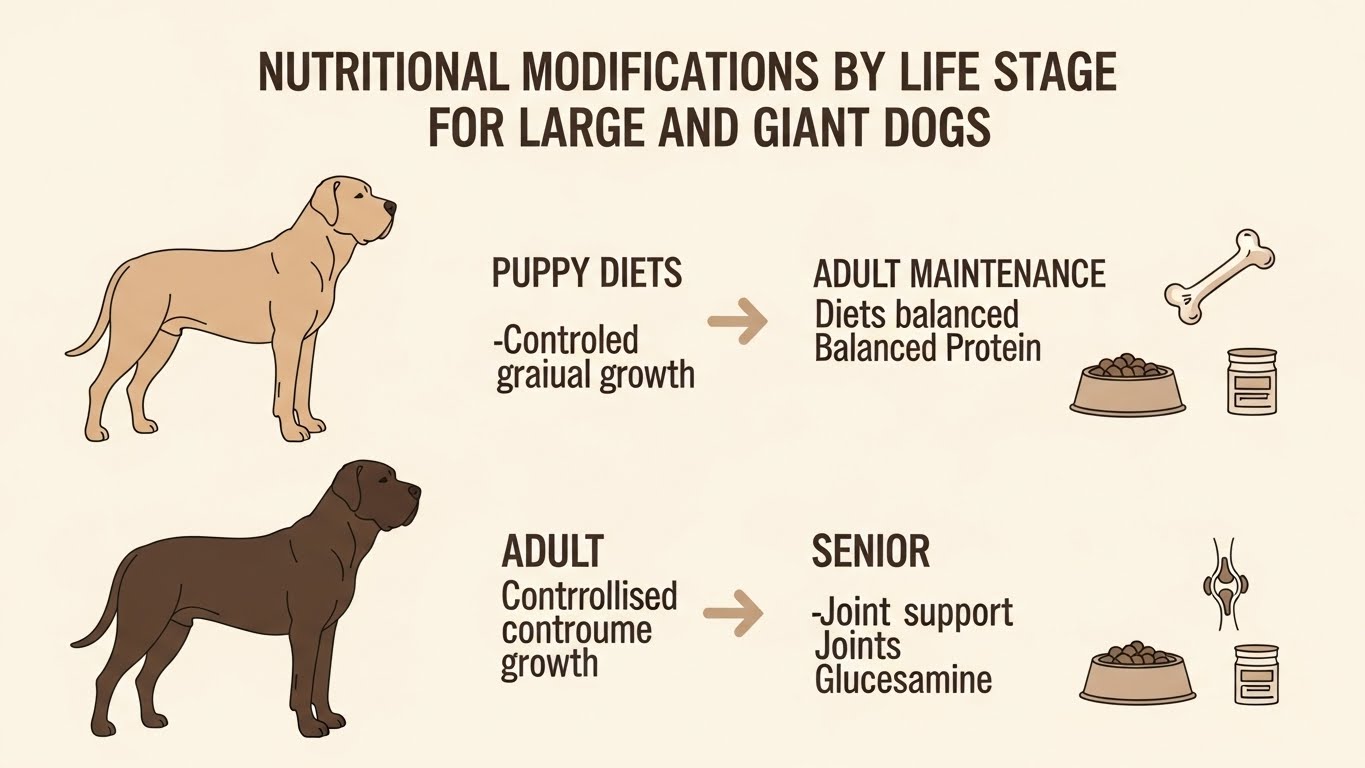
Keeping your giant dog healthy at its biological age is one of the most influential health choices that you will make. Big breed dog pups need a balanced diet to ensure gradual growth, and not too many calories to encourage over-fast development. Large dogs at the adult stage require maintenance diets with an appropriate protein level and ingredients that support joint health, such as glucosamine.
When large dogs reach their senior years, typically around age 6 or 7, nutritional requirements vary substantially. Most senior formulas contain fewer calories to prevent weight gain, more fibre as a digestive aid, more antioxidants to support immune function, and more omega fatty acids to improve cognitive function and joint health.
I have also been associated with nutritionists who have emphasised that the senior transition to food should be based on biological, rather than chronological, age. A five-year-old Great Dane in good condition may not require senior food, whereas a poorly ageing one may.
Portion control is also more significant as we grow older because metabolism decreases, and most owners unwillingly feed ageing dogs, which need twenty to thirty per cent less calories than their younger counterparts needed.
Physical Activity Prescription among Varied Age Equivalents
Running at the level and length that is comparable to the biological age of your large dog will keep you fit without injury. Even young large dogs, though full of puppy activity, should have controlled activity to safeguard developing bones and joints. According to the five-minute rule, structured exercise is intended to be 5 minutes per month of age, twice daily, until maturity.
Large dogs in their prime can perform strenuous activities such as hiking, swimming, and agility training without discomfort because they are physically and mentally well-suited to these activities. As large dogs age, exercise should emphasise low-impact activities that maintain muscle integrity without straining the joints.
Older large-breed dogs are becoming more effective swimmers because swimming is a cardiovascular activity that does not strain their joints. I have observed significant improvement in older large dogs when owners transitioned from long walks to shorter, more frequent outings that included swimming.
Mental activity is also relevant as age advances; puzzle toys, scent work, and mild training activities help keep ageing brains sharp. It is important to note that an eight-year-old Newfoundland will have the lifespan of a person nearing sixty; it would be impractical to expect an older adult to run marathons, nor is it reasonable to expect your dog to do the same.
Preventive Healthcare Schedule of the Large Breeds
Veterinary care schedules must be based on biological age rather than arbitrary schedules. Large-breed dogs require regular vaccinations and growth checks, as well as special care for developmental orthopaedic disorders. Annual examinations and blood work are generally recommended for adult large dogs, as they provide baseline health markers.
As large dogs age, preventive care should be increased to every 2 years, including comprehensive blood work, urinalysis, and, occasionally, imaging. I always advise large-breed owners that it is far easier to solve problems at an early age, when the dogs are still biologically in the middle of their lives, than to solve them once they are older.
In accordance with breed predispositions, certain screenings will be required: Golden Retrievers will require cardiac and cancer screening, and German Shepherds will require close screening of the hips and elbows. The dental clinic provides age-based schedules for older dogs, with some requiring a dental examination every six months rather than annually.
Older dogs should be managed according to vaccination protocols, in which, in some cases, veterinarians may recommend titration testing rather than routine revaccination because their immune responses differ. To date, your large dog's biological age informs proactive preventive care rather than adherence to protocols that may fit anyone.
How to Make the Most of Each Life Stage
Accepting your large dog's biological age helps you cherish each life stage appropriately, rather than rushing through puppyhood or denying senior status. Large-breed puppies, despite their size, remain infants who require patience, socialisation, and gentle guidance. Their teenage years can be challenging even for experienced owners, but recognising that this represents only a fraction of their human-equivalent lifespan provides perspective.
The adult years, though shorter for large breeds than small ones, offer incredible partnership opportunities for training, adventures, and bonding. I encourage large-breed owners to maximise these prime years rather than take them for granted.
The senior years, which arrive earlier than many owners expect, bring different joys, including deeper bonds, calmer companionship, and the satisfaction of providing comfort to a loyal friend.
Some owners struggle with their large dog's relatively short lifespan, but understanding the biological age calculation helps prepare, both emotionally and practically, for each transition. Making memories, taking photos, and fully engaging with your large dog at every age becomes easier when you recognise how quickly their life stages pass compared to the human life cycle.
Frequently Asked Questions
How many human years is my large dog in if he's five?
A five-year-old large-breed dog is approximately 40 in human years, using modern conversion methods, placing them in early middle age rather than at their prime.
Do all large dogs age at the same rate?
No, giant breeds age faster than large breeds, and individual factors such as genetics, nutrition, and healthcare contribute to variation even within the same breed category.
When should I switch my large dog to senior food?
Most large dogs benefit from senior formulas at approximately six to seven years of age, though individual health status should guide this decision in consultation with a veterinarian.
Are online dog age calculators accurate?
Quality calculators based on current veterinary research provide valid estimates, though they can't account for individual health factors that affect biological ageing rates.
Why do large dogs have shorter lifespans than small dogs?
Research suggests faster cellular ageing, increased cancer rates, and greater organ stress from supporting larger body mass contribute to shorter lifespans in large breeds.
Calculate Your Large Dog's Age Now
Use our specialized large dog age calculator to discover your pet's true age equivalent and get personalized care recommendations.
Try Our Dog Age Calculator