Senior Dog Exercise Calculator: A Guide
Introduction to Senior Dog Fitness
At the age of nine, my German Shepherd made me realize that something had changed. The dog that used to run furiously around the yard now preferred leisurely walks. Like other pet owners, I was left wondering how much exercise is suitable for an aging companion.
This question motivated me to explore dog exercise calculator tools that help pet owners find the right balance while keeping their aging pets safe. Such calculators have become increasingly sophisticated and now include breed-specific factors.
Good knowledge of how to use these tools can truly revolutionize the care of your elderly pet. In this article, I shall present practical knowledge acquired through veterinary visits, experience, and interactions with other senior dogs.
Why Senior Dogs Need Modified Exercise
Age-related physiological changes are significant and should be taken seriously by responsible owners. Depending on their size, dogs reach their senior years at age seven (large breeds) and nine or ten (small breeds). At this stage, their metabolism declines, causing significant joint cartilage loss, weakening musculature, and reducing cardiovascular performance.
Without adequate maintenance, the cardiovascular system is compromised, and your elderly dog is unable to perform the same tasks at the same high intensity as before. Exercising an old dog excessively is unsafe as it may cause injuries to the joints, muscle strains, and heart strain, which may be serious.
On the other hand, insufficient exercise leads to obesity, muscle atrophy, and early deterioration. It is difficult to strike a balance that is neither too much nor too little. Such a balance varies with each individual based on many factors about the dog.
What Is a Senior Dog Exercise Calculator?
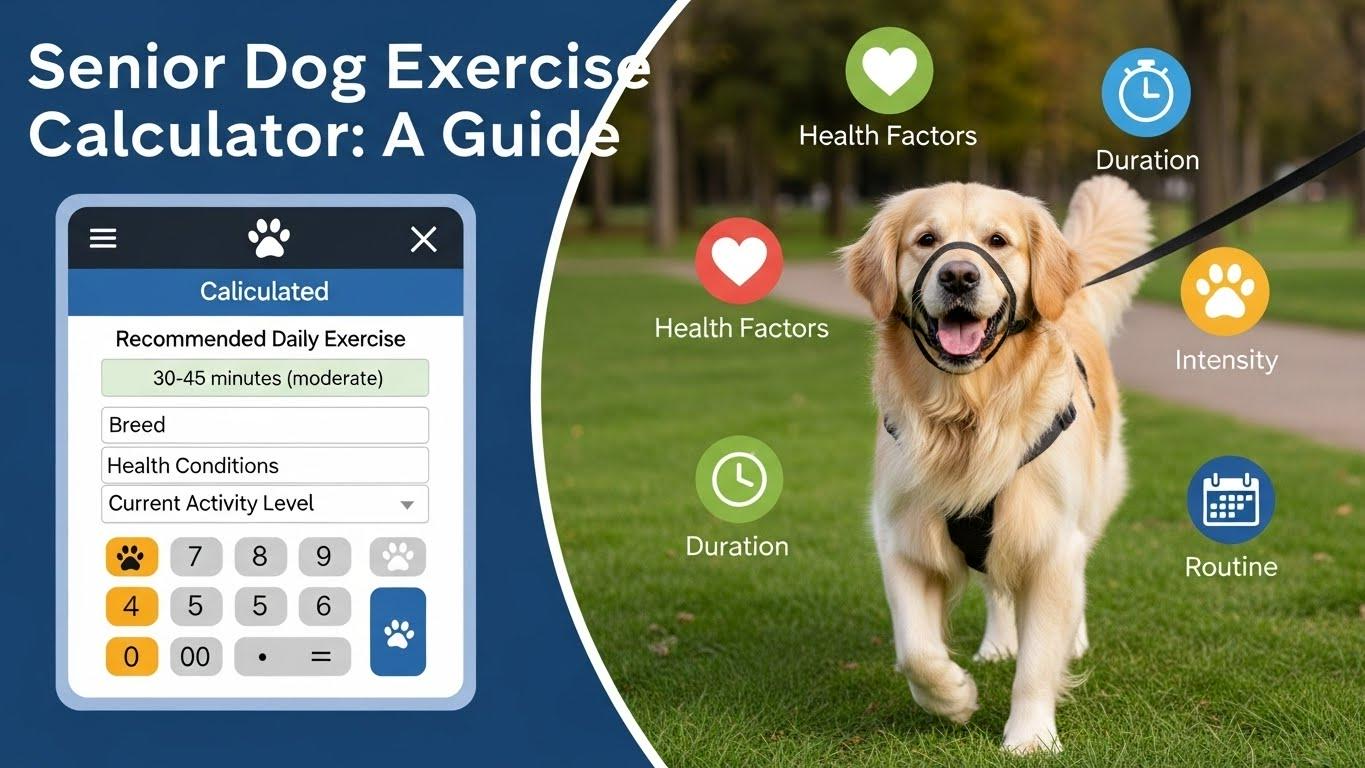
A senior dog exercise calculator is a specialized evaluation tool that considers key variables and recommends appropriate activity for older dogs. These typically require information such as the dog's age, current weight, health status, and activity level.
This information is entered into the algorithm, which compares it with veterinary guidelines for the duration and intensity of daily exercise. Complex calculators account for weather conditions, recent surgery, or medications. Output includes suggested activities during walks, swimming, and weekly schedules.
No calculator will ever replace professional veterinary advice, yet these are useful starting points to organize the exercise program of your senior dog. You can use them to help discuss your pet's specific needs with your veterinarian.
Key Factors These Calculators Assess
Knowing which variables are considered when giving exercise recommendations helps you use these calculators more effectively and interpret the results more accurately. Age matters significantly: a seven-year-old dog can bear much more than a twelve-year-old dog. Weight is important: being overweight is associated with reduced joint mobility.
In older adults, exercise capacity is significantly affected by breed, and some breeds have higher requirements throughout their lifetimes. Previous exercise level is essential: a dog who has always exercised regularly will adapt differently than a dog who has been sedentary.
Existing conditions such as heart disease, arthritis, or hip dysplasia significantly affect safe exercise parameters. The climate factor is also applied to the recommendation, as senior dogs have difficulty regulating their body temperature. All aspects are interrelated, forming a complex picture that quality calculators seek to interpret into practical advice.
Breed-Specific Considerations for Aged Dogs
Different breeds do not age at the same rate, which significantly affects exercise requirements in older age. Large breeds such as Great Danes and Saint Bernards typically reach senior age at five or six and may require modifications earlier than general guidelines recommend.
Herding breeds, such as the Border Collie and the Australian Shepherd, continue to need mental stimulation even as physical ability diminishes. Bulldogs and Pugs are brachycephalic breeds that should be given extra consideration for breathing restrictions and fitness.
Sporting breeds such as Labrador Retrievers derive greater enjoyment from swimming exercises that put minimal strain on joints while keeping the heart healthy. Miniature breeds remain remarkably active into their teens, though they may develop orthopedic problems that require special attention. Senior dog exercise calculators that include breed-specific data provide more personalized recommendations.
Understanding When to Reduce Activity
Training yourself to recognize signs in your older dog will help avoid injury and make exercise an excellent experience. Limping or soreness after walks are signs that you have likely overexerted your dog. Hard breathing during moderate exercise indicates cardiovascular strain or a need for reduced physical activity that should be addressed.
Walking too slowly or showing difficulty on the leash suggests that your dog may be experiencing discomfort. Extended recovery time when your dog appears exhausted for hours after exercise means you should reduce activity. Increased irritability or withdrawal, along with behavioral changes, are associated with overexertion-induced pain in older dogs.
Such alarming symptoms should prompt immediate reduction in activity and consultation with your veterinarian. A quality senior dog exercise calculator will assist you in re-establishing appropriate levels of activity. By observing subtle changes in your dog's behavior, you can prevent more serious complications.
Benefits of Proper Exercise for Older Dogs
Through proper, regular exercise, the quality of life in senior dogs can be significantly improved. Exercise helps keep muscles strong to support aging joints, prevents weakness, and slows physical aging. Regular mobility enhances circulation, supplying nutrients and oxygen to organs and supporting overall organ function.
Cognitive functions benefit from the mental stimulation of walks and play, which minimizes the symptoms of canine dementia-like behavior. Exercise supports weight management, which reduces complications of obesity, such as diabetes, respiratory problems, and arthritis.
Socializing by visiting parks helps combat loneliness, especially among older dogs. The digestive system generally benefits from regular exercise, which helps alleviate frequent problems seniors face, such as constipation. Using a senior dog exercise calculator helps ensure that you receive these benefits without the risks of inappropriate activity levels.
Using Calculators Effectively for Senior Dogs
Accurate, honest input and reasonable expectations of what calculators can achieve are essential. First, ensure precise information about your dog's exact weight and reported health issues. Provide input data truthfully, not optimistically, as underreporting conditions can lead to recommendations that are inappropriate.
Treat results as starting points, not prescriptions. Observe how your individual dog reacts to recommended activity levels. Compare suggestions from various calculators to identify common directions and exceptions.
Record your dog's responses across different activity levels; these will serve as personal data for future adjustments. Schedule regular checkups with a veterinarian to receive guidance on your pet's care and overall health. Recalculate periodically as your dog matures and conditions might change. Such tools are most practical when combined with careful observation and professional advice.
Low-Impact Exercise Choices for Older Dogs
The type of exercise chosen is equally essential when planning activities for older dogs as duration and frequency. Swimming offers outstanding cardiovascular benefits with minimal joint stress, making it suitable for dogs with arthritis or hip dysplasia.
Frequent, brief workouts are better than long sessions because they allow more time to rest between activities and help prevent fatigue and strain. Playing with toys on grass at a moderate pace provides mental stimulation without causing harm.
Activities such as food puzzles or gentle tug-of-war can help keep dogs occupied during extreme weather when outdoor physical activity is challenging. Aquatic therapy, called hydrotherapy, is available at most veterinary rehabilitation centers and provides guided exercise in water. A quality senior dog exercise calculator can suggest multiple activity ideas that will benefit your dog, based on size and preferences.
Adjusting for Health Conditions
There is a range of chronic health problems prevalent in older adults that require specific exercise modifications. Dogs with arthritis, which predominates among dogs older than 8 years, benefit from shorter walks on flat surfaces with sufficient warm-up time.
Heart disease requires reducing physical activity that increases heart rate excessively. Regular exercise effectively manages blood glucose levels in diabetic patients when it's scheduled and predictable.
A familiar walking path helps dogs with cognitive dysfunction, providing comfort and sensory stimulation. Vision or hearing loss necessitates adaptations, such as walking on a leash in a contained area. Obesity in elderly dogs requires progressive increases in activity with dietary modifications guided by your veterinarian. Quality calculators that include health condition details provide more accurate safe exercise parameters.
Designing a Weekly Workout Plan
Designing structured activities each week improves consistency and provides reasonable flexibility. After more vigorous workouts, older bodies require rest days. Plan major workouts for comfortable-temperature days, not during midday heat or extreme winter cold.
Physical exercise and mental stimulation activities should be distributed throughout the day to support overall well-being. Maintain flexibility in timing, recognizing that elderly dogs have fluctuating energy levels and may require adjustments.
Monitor activities within a basic log to identify trends that will guide adjustments. Check and revise schedules as your dog changes with age and health status. Several calculator websites offer features that help organize recommended exercises into effective routines.
Common Mistakes in Senior Dog Exercise
Several misconceptions undermine effective senior dog exercise programs. Weekend warrior syndrome with sedentary weekdays followed by intense weekend workouts leads to injuries. Daily, consistent exercise is much safer and more beneficial.
Overlooking gradual decline in ability often leads to overtraining and injuries. Comparing your senior dog to younger animals or their past abilities creates unrealistic expectations that can result in overexertion.
Stopping exercise altogether due to health diagnoses will accelerate deterioration; proper, modified activity provides immediate benefits. Exercising immediately after eating can cause digestive complications, especially in large breeds. Failure to include warm-up and cool-down periods puts muscles and joints at higher risk of injury. Applying outdated calculations without regular recalculation disregards aging factors.
FAQs
How frequently should I recalculate my senior dog's exercise requirements?
Recalculate every three to four months, or when your dog experiences a significant health change, including new diagnosis, weight gain or loss of more than 5%, or a noticeable shift in mobility.
Can I use the same calculator for multiple senior dogs?
No, calculate individually for each dog because breed, weight, age, and health status present different needs for each dog in your household.
Do online calculators for senior dog exercise work?
They provide reasonable estimates based on general guidelines, although individual dogs differ significantly. Always consult your veterinarian for the best approach and personalized suggestions.
My old dog does not want to exercise. What should I do?
Resistance commonly indicates discomfort or pain. Trying to force unwilling dogs without consulting your veterinarian is not advisable, as health problems may require medical attention.
Do weather conditions affect my elderly dog's exercise routine?
Absolutely. Elderly dogs have difficulty maintaining proper temperature, so outdoor time should be reduced during hot or cold weather, and indoor activities should be considered when conditions are extreme.
Ready to Plan Your Senior Dog's Exercise Routine?
Use our comprehensive calculator to determine safe activity levels tailored to your senior dog's needs.
Try Our Calculators