Puppy Weight Growth Chart: Your Complete Guide
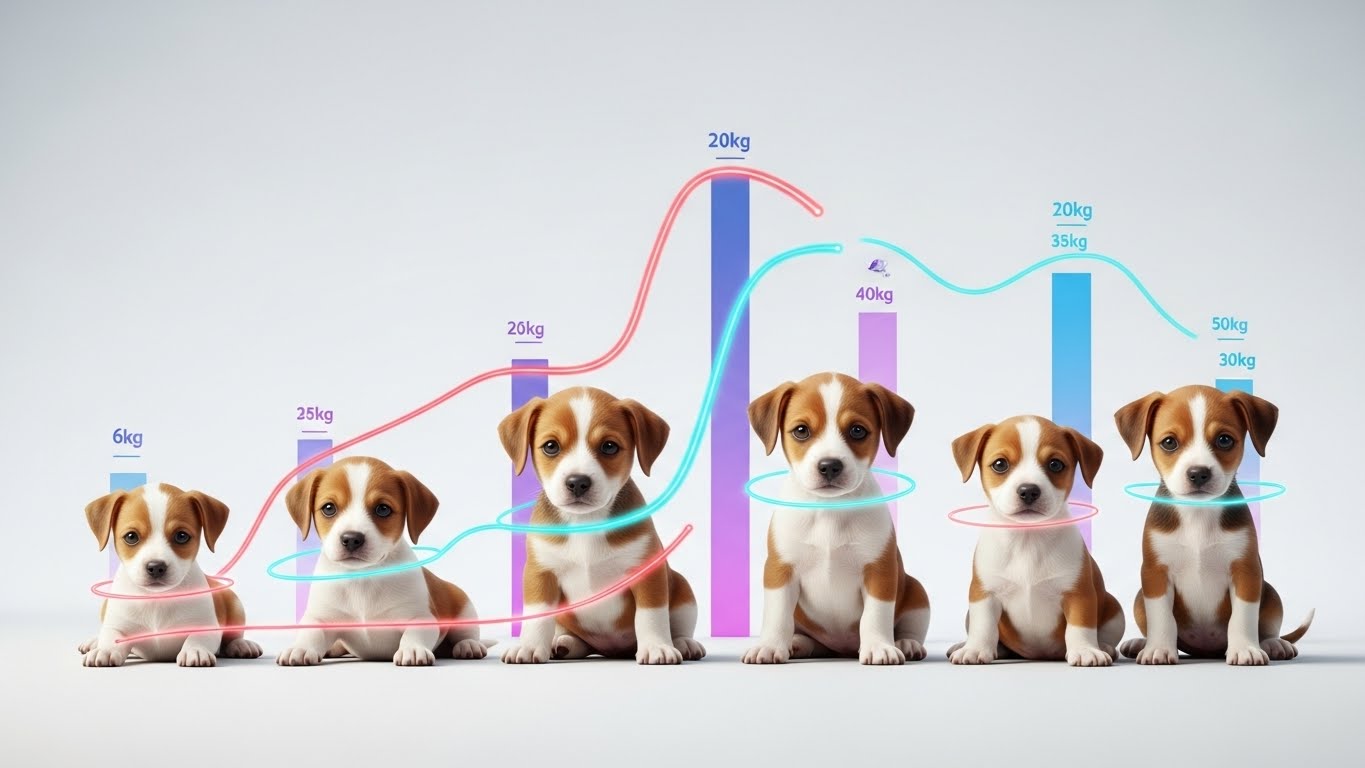
Understanding Puppy Growth Stages
Puppies go through several distinct growth stages from birth to adulthood, each characterized by specific physical and behavioral changes. Understanding these stages helps you track whether your puppy is developing normally and adjust their care accordingly.
The neonatal stage (0-2 weeks) involves rapid weight gain as puppies double their birth weight. During the transitional stage (2-4 weeks), puppies open their eyes and begin to hear. The socialization stage (4-12 weeks) is critical for behavioral development while physical growth continues steadily.
The juvenile stage (3-6 months) brings the most visible growth spurts, with puppies gaining significant height and weight. Adolescence (6-18 months) varies by breed size, with smaller breeds maturing faster than large breeds. Some giant breeds don't reach full maturity until 24 months.
Puppy Weight Chart by Breed Size
Puppy weight charts vary significantly based on breed size categories: toy, small, medium, large, and giant. Each category follows a different growth curve with distinct milestones at key ages.
Toy Breeds (under 10 lbs adult weight): Chihuahuas, Yorkshire Terriers, and Pomeranians typically weigh 2-4 oz at birth. By 8 weeks, they reach 1-2 lbs. At 6 months, they're usually 75-90% of adult weight. They reach full maturity by 9-12 months.
Small Breeds (10-25 lbs adult weight): Breeds like Beagles and Cocker Spaniels weigh 4-8 oz at birth. By 8 weeks, they weigh 3-6 lbs. At 6 months, they reach 60-75% of adult weight. Full maturity occurs at 10-12 months.
Medium Breeds (25-50 lbs adult weight): Border Collies and Bulldogs weigh 8-16 oz at birth. By 8 weeks, they weigh 6-12 lbs. At 6 months, they're 50-70% of adult weight. They mature at 12-15 months.
Large Breeds (50-100 lbs adult weight): German Shepherds and Labrador Retrievers weigh 1-1.5 lbs at birth. By 8 weeks, they weigh 12-20 lbs. At 6 months, they reach 50-60% of adult weight. Full maturity takes 15-18 months.
Giant Breeds (over 100 lbs adult weight): Great Danes and Mastiffs weigh 1.5-2 lbs at birth. By 8 weeks, they weigh 15-25 lbs. At 6 months, they're only 40-50% of adult weight. They don't mature until 18-24 months.
Factors Affecting Puppy Growth
Multiple factors influence how fast and how large your puppy will grow. Genetics plays the primary role, determining the growth curve your puppy will follow based on breed and parent size.
Nutrition significantly impacts growth rate and final size. Puppies fed high-quality, age-appropriate food with proper protein, fat, and calcium ratios grow more consistently. Overfeeding can cause too-rapid growth in large breeds, increasing orthopedic problems, while underfeeding stunts development.
Health status affects growth substantially. Parasites like roundworms and hookworms steal nutrients, causing slow growth. Illnesses during critical development periods can permanently impact adult size. Spaying or neutering before maturity may slightly alter final height by affecting growth plate closure.
Environmental factors also matter. Puppies experiencing stress, inadequate socialization, or poor living conditions may not reach their genetic potential. Conversely, puppies in enriching environments with proper exercise and mental stimulation tend to develop optimally.
How to Track Your Puppy's Weight
Consistent weight tracking provides valuable insights into your puppy's health and development. Use a digital scale for small puppies (under 20 lbs) and a bathroom scale for larger puppies. For medium puppies, weigh yourself holding the puppy, then subtract your weight.
Establish a weekly weigh-in routine during the first 6 months. Always weigh at the same time of day, preferably in the morning before feeding. Record weights in a journal or spreadsheet with the date and any notable observations about eating habits or activity levels.
Compare your puppy's weight to breed-specific growth charts, but remember that individual variation is normal. Look for consistent growth rather than exact chart matching. A healthy puppy should gain weight steadily without sudden jumps or plateaus.
Beyond weight, monitor body condition by feeling your puppy's ribs. You should be able to feel ribs easily but not see them prominently. The waist should be visible from above, and there should be a slight abdominal tuck when viewed from the side.
Feeding Your Growing Puppy
Proper nutrition during the growth phase sets the foundation for lifelong health. Puppies require puppy-specific food with higher protein and fat content than adult dog food, typically 22-32% protein and 10-25% fat depending on breed size.
Feed puppies 3-4 meals daily until 6 months of age to support rapid growth and maintain stable blood sugar. At 6-12 months, transition to 2 meals daily. Use feeding guidelines on puppy food packages as starting points, but adjust based on your puppy's body condition and growth rate.
Large and giant breed puppies need special consideration. They should eat large-breed puppy formulas with controlled calcium and phosphorus ratios (1.2:1 to 1.5:1) to prevent developmental orthopedic diseases. Avoid supplementing with extra calcium, which can cause skeletal problems.
Monitor your puppy's body condition rather than feeding exact amounts. If ribs become visible, increase food slightly. If you can't feel ribs easily, reduce portions. Consult your veterinarian if you're unsure about appropriate feeding amounts for your puppy's growth stage.
When Do Puppies Stop Growing?
The age at which puppies stop growing varies significantly by breed size. Understanding your breed's typical growth timeline helps you know when to transition from puppy food to adult food and when to adjust exercise routines.
Toy and small breeds grow fastest, reaching their adult height by 6-8 months and adult weight by 9-12 months. They can typically transition to adult food at 9-12 months. Despite early maturity, continue socialization and training through adolescence.
Medium breeds reach adult height around 9-12 months but continue filling out until 12-15 months. Switch to adult food at 12 months. These breeds benefit from consistent exercise during the late growth phase to build proper muscle tone.
Large breeds take 12-18 months to reach full size, with some continuing to add muscle mass until 24 months. Keep them on large-breed puppy food until 12-15 months to support proper joint development. Avoid intense exercise like jumping or long-distance running until growth plates close around 15-18 months.
Giant breeds grow slowest, not reaching full maturity until 18-24 months. They should remain on giant-breed puppy food until at least 18 months. Their extended growth period requires careful management to prevent orthopedic problems from too-rapid growth.
Common Growth Concerns
Several growth-related concerns can arise during puppyhood. Recognizing problems early allows for timely intervention and better outcomes.
Panosteitis: This painful bone inflammation affects large-breed puppies between 5-14 months. Symptoms include sudden lameness that shifts between legs. It's self-limiting but may require pain management. Maintain moderate exercise and avoid overfeeding during episodes.
Hip Dysplasia: This developmental orthopedic disease is common in large breeds. Genetics plays the primary role, but rapid growth from overfeeding worsens severity. Signs include difficulty rising, bunny-hopping gait, and reluctance to exercise. Early diagnosis through veterinary examination improves treatment options.
Growth Plate Injuries: Puppies' bones have growth plates (areas of developing cartilage) that are vulnerable to injury from trauma or excessive exercise. Injuries can cause uneven limb growth. Limit high-impact activities like jumping until growth plates close.
Stunted Growth: Puppies consistently below growth chart predictions may have underlying issues like parasites, inadequate nutrition, or chronic illness. Veterinary examination can identify treatable causes. Early intervention often allows puppies to catch up developmentally.
Using a Puppy Growth Calculator
Puppy growth calculators are valuable tools for estimating adult size based on current age and weight. These calculators use breed-specific formulas and growth curves to predict final weight and height.
The most accurate predictions come from measurements taken at 14-16 weeks of age. At this point, growth patterns are well-established and the remaining growth is more predictable. For mixed breeds, calculators considering parent weights provide better estimates.
Common calculation methods include the 16-week formula (current weight × 2), the paw size method (larger paws indicate larger adult size), and breed-specific multipliers. Online calculators often combine multiple methods for improved accuracy.
Use growth predictions as guidelines rather than guarantees. Individual puppies can vary 10-20% from predictions due to genetics, nutrition, and health factors. Regular weight tracking reveals whether your puppy is following their predicted growth curve or deviating significantly.
Breed-Specific Growth Patterns
Different breeds have unique growth patterns beyond size categories. Understanding your breed's specific pattern helps set appropriate expectations and identify potential problems.
Labrador Retrievers: Labs experience steady growth until 6-9 months, then slow significantly. Males typically weigh 65-80 lbs adult, females 55-70 lbs. They're prone to obesity, so monitor body condition carefully during and after the growth phase.
German Shepherds: GSDs have a long growth period, reaching full size at 18-24 months. They experience a major growth spurt at 4-6 months. Adult males weigh 65-90 lbs, females 50-70 lbs. Hip dysplasia risk requires controlled growth through proper nutrition.
Golden Retrievers: Goldens grow steadily until 12-14 months, then fill out until 18 months. Males reach 65-75 lbs, females 55-65 lbs. They mature emotionally slower than physically, remaining puppy-like in behavior despite adult size.
French Bulldogs: Frenchies reach 90% of adult size by 9 months and finish growing by 12 months. Adults weigh 16-28 lbs. Their compact build makes weight monitoring critical to prevent obesity, which exacerbates breathing problems.
Great Danes: These giants experience rapid growth, gaining 10-15 lbs monthly during peak growth at 4-8 months. They reach full height by 18 months but continue filling out until 24-30 months. Adults weigh 110-175 lbs. Controlled growth is critical to prevent orthopedic disease.
Monitoring Healthy Development
Beyond weight tracking, comprehensive monitoring ensures your puppy is developing optimally across all areas. Regular veterinary checkups provide professional assessment of growth progress and early detection of potential issues.
Schedule vet visits at 8, 12, and 16 weeks for vaccinations and growth assessment. Your vet will check body condition, palpate joints for abnormalities, and verify that growth is proceeding appropriately for the breed. Discuss any concerns about growth rate, eating habits, or physical development.
Monitor developmental milestones alongside physical growth. Puppies should progressively improve coordination, strengthen teeth through teething, and develop adult coat texture. Behavioral development should include increased confidence, improved bite inhibition, and better impulse control.
Track exercise tolerance as your puppy grows. Young puppies tire quickly but should show increasing stamina. Excessive fatigue, limping after play, or reluctance to exercise may indicate orthopedic issues requiring veterinary evaluation.
Keep detailed records including weight measurements, food amounts and types, exercise duration, vaccination dates, and any health concerns. This information helps your veterinarian assess growth patterns over time and make informed recommendations about your puppy's care.
FAQs
How accurate are puppy weight growth charts?
Puppy weight growth charts are generally accurate guidelines based on breed averages, but individual puppies can vary by 10-20% from the chart predictions. Factors like genetics, nutrition, and health status affect growth rates. Use charts as references rather than absolute standards, and consult your vet if you notice significant deviations from expected growth patterns.
At what age should I start tracking my puppy's weight?
Start tracking your puppy's weight from the day you bring them home, typically around 8 weeks of age. Weekly weigh-ins during the first 6 months help you monitor growth patterns and catch any health issues early. After 6 months, you can reduce frequency to bi-weekly or monthly weigh-ins as growth slows down.
Can I predict my puppy's adult weight accurately?
For purebred puppies, you can estimate adult weight fairly accurately using growth charts and the 16-week formula (weight at 16 weeks × 2 for most breeds). Mixed breed predictions are less accurate but can be estimated using parent weights and paw size. Predictions are most reliable between 14-16 weeks of age.
What if my puppy is growing too fast or too slow?
Rapid growth (over 20% above chart predictions) may indicate overfeeding or future joint problems in large breeds. Slow growth (under 20% below predictions) could signal underfeeding, parasites, or health issues. Consult your veterinarian if your puppy consistently deviates more than 15-20% from breed-standard growth curves, especially if accompanied by other symptoms.
Do male and female puppies grow at different rates?
Yes, male puppies typically grow larger and faster than females of the same breed, reaching 10-20% greater adult size on average. Males usually have a longer growth period and may take an additional 2-3 months to reach full maturity. However, individual variation can be significant, so gender is just one factor in predicting adult size.
Ready to Track Your Puppy's Growth?
Use our comprehensive pet calculators to monitor your puppy's development, plan nutrition, and ensure healthy growth every step of the way.
Try Our Calculators