Puppy Exercise Calculator: Safe Activity Guide
What Is a Puppy Exercise Calculator
A puppy exercise calculator is a tool that helps novice dog owners make informed decisions about the level of activity their young dogs should engage in. With years of experience raising and training dozens of puppies, I can attest that it is one of the most valuable resources for first-time owners.
A puppy exercise calculator factors in your puppy's current age, breed size, and health to generate safe activity recommendations tailored to their development. The tool provides guidelines based on minutes per day and helps avoid both undertraining and risky overtraining.
Imagine it as a personalized fitness program for your growing pup, precisely tailored to its developmental stage and physical abilities.
Why Puppies and Adults Differ in Exercise
Young puppies should not be treated as smaller versions of adults when it comes to physical activity. Their bones have growth plates, or soft spaces of developing cartilage, which are not yet formed into solid bone.
Overworking them during exercise, especially high-impact activities such as jumping or running on hard surfaces, may permanently damage these growth plates. I have seen some distressing scenarios in which irresponsible owners created long-term joint problems by training their puppies too intensively.
The effects include poor bone development, early-stage arthritis, and pain that can cause the dog to suffer later in life. Mature dogs also have greater cardiovascular endurance and muscle development than puppies and therefore can handle more intensive activity. It is because of these basic biological variations that a puppy exercise calculator will produce age-specific recommendations and not generic exercise guidelines.
Understanding the Five-Minute Rule
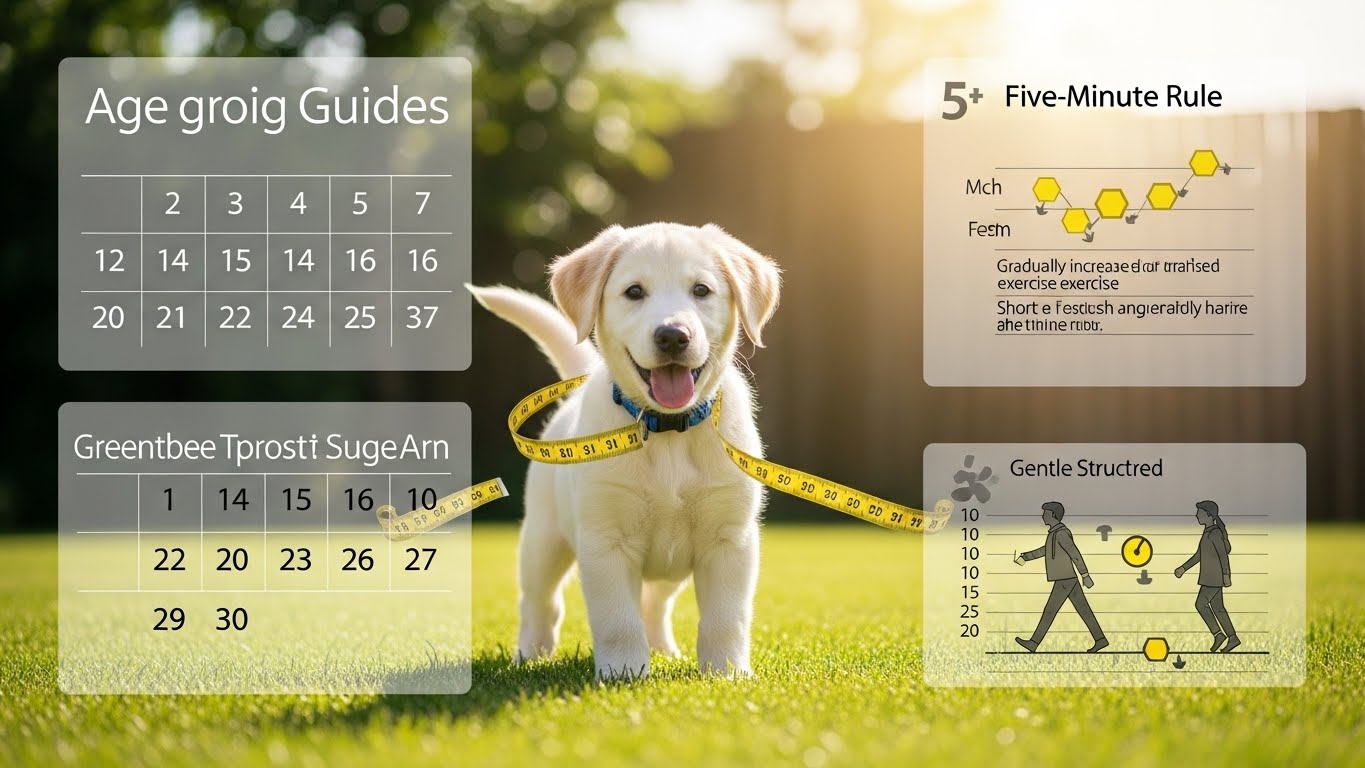
The five-minute rule helps owners plan daily exercise based on your puppy's age in months. For example, a three-month-old gets about fifteen minutes twice daily, making routines clear and manageable.
This rule has proven highly successful across most breeds, but it needs to be adjusted for giant breeds, which take even longer to develop. This is not just an arbitrary figure; it is based on decades of veterinary research on skeletal development and injury patterns in young dogs.
The rule is especially true for structured, leash-based exercise; free play in safe surroundings where the puppies can rest when they are exhausted is of a different nature. This principle is built into quality puppy exercise calculators, which also account for other individual factors.
Factors That Determine Puppy Physical Activities
The age factor alone is not enough to determine the level of activity your puppy can perform in a day; several other variables also influence it. The size of the breed is significant — puppies of large and giant breeds, such as Great Danes or Saint Bernards, take much longer to develop bone structure fully and may not mature until eighteen to twenty-four months of age.
Their growth plates remain susceptible and require greater care when exercising at higher intensities. Health condition is critical, and puppies who are sick or have just received a vaccine may require reduced activity. Your puppy's tolerance for exercise depends on their individual fitness and personality.
Some pups find it easy to run around and expend energy, while others tire quickly because they are less active. The safe time for exercise is influenced by environmental factors such as temperature and surface. Even nutrition influences exercise ability: well-fed puppies that maintain a sufficient calcium-to-phosphorus ratio in their diet have stronger bones that can sustain appropriate activity levels.
Breed-Specific Exercise Requirements
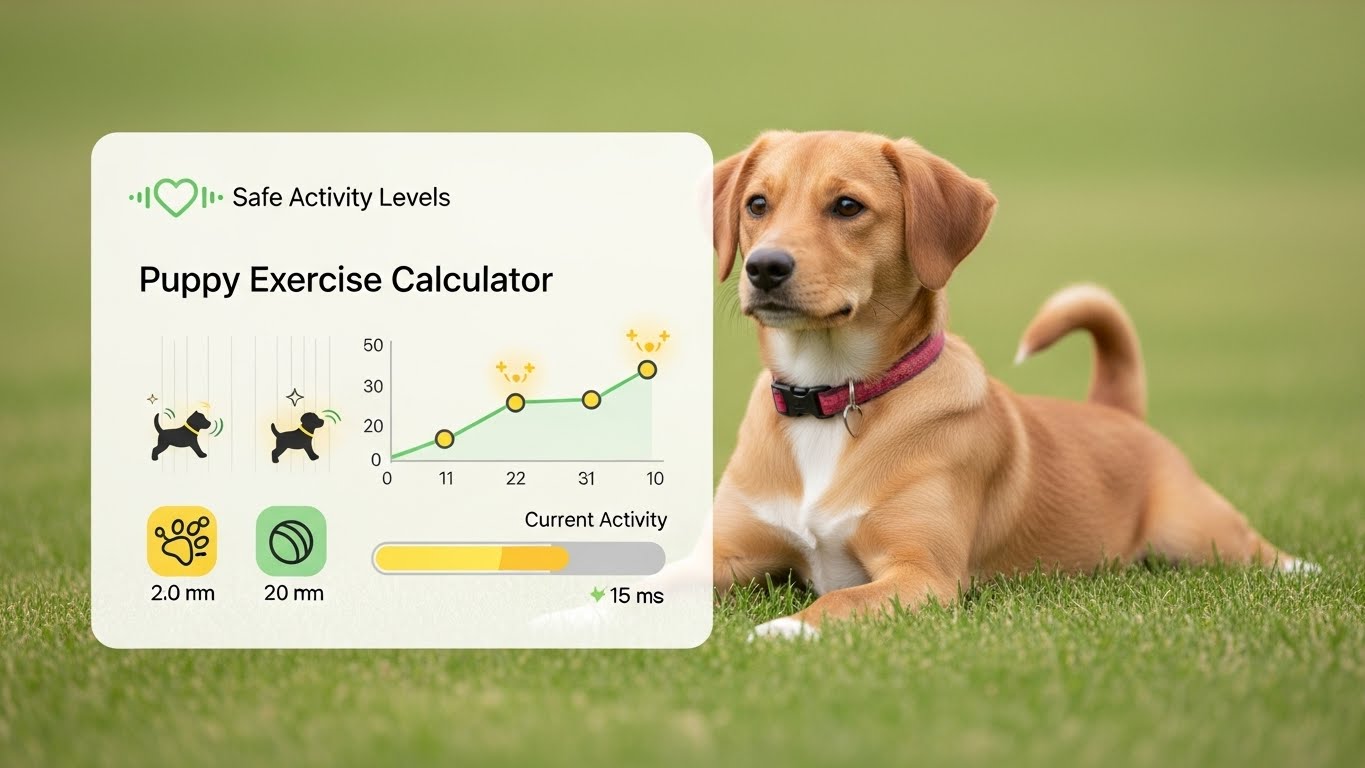
The differences in exercise needs and developmental stages among breeds are significant and must be taken into account by any quality puppy exercise calculator. Small dogs such as Chihuahuas or Yorkshire Terriers typically reach physical maturity in about nine to twelve months; therefore, they can gradually increase exercise intensity earlier.
Medium breeds take about 12 to 15 months to reach full maturity. Large breeds require fifteen to eighteen months, and giant breeds may not reach skeletal maturity until well beyond their second birthday. I recall a young Mastiff whose owner was frustrated with the exercise limitation, but that limitation saved joints that would carry over 150 pounds during adulthood.
Working breed puppies are usually very energetic, which can lead owners to overwork them, but that energy does not mean their bodies are prepared for intensive work. Any calculator results must be complemented by breed research.
How to Use a Puppy Exercise Calculator
To obtain proper and helpful results from any puppy exercise calculator, it is necessary to input correct and truthful data concerning your particular dog. Begin by knowing the exact age of your puppy in weeks or months; otherwise, you may receive faulty advice.
Confirm the breed of your puppy, or for mixed breeds, their approximate adult size based on current weight and paw size. Enter any known health issues, past injuries, or concerns mentioned by your veterinarian regarding physical growth. Most calculators do not return a single number; instead, they provide a range, which I prefer, because it accounts for individual variation.
Recording your puppy's reactions to different activity levels helps you personalize their routine, ensuring exercises stay safe and effective as you learn their tolerance and needs.
Warning Signs of Over-Exercising
Knowing when you've pushed your puppy too hard will help you avoid not only short-term injuries but also long-term harm to the puppy's development. The most apparent symptoms are refusing to walk further, sitting down during activities, excessive panting, walking with pain, or favoring one leg.
More subtle cues may include loss of appetite after physical exercise, abnormal sleepiness that isn't an ordinary puppy nap, or stiffness after periods of rest. I have encountered puppies that, at first, appear excited; however, a few hours later, they become irritable and no longer want to climb stairs or do things they used to enjoy.
Some owners mistake the quiet behavior caused by exhaustion for good behavior and end up praising a tired puppy without recognizing the warning signs. Persistent symptoms, such as limping throughout the day, should be evaluated by a veterinarian. A puppy exercise calculator can help ensure these concerning thresholds are not reached by setting appropriate boundaries from the start.
Safe Activities for Growing Puppies
Not all activities are risky for developing puppy bodies, and knowing which activities are safest helps put together an adequate daily routine. Growing joints are protected by low-impact exercises such as light leash walking on grass or other soft surfaces, which provide sufficient stimulation.
Supervised free play with appropriately sized and gentle playmates enables puppies to manage their energy levels on their own - they automatically rest when they feel exhausted. When properly supervised, swimming is an excellent form of exercise with no joint strain, though not all puppies like water at first.
Basic training exercises that include movement keep the body and mind active without excessive physical strain. Activities to avoid include forced running with bicycles or joggers, frequent jumping or catching flying discs, excessive stair climbing, and rough play with much larger dogs. I recommend delaying high-impact activities until your veterinarian confirms that growth plates are closed, based on examination or X-rays.
Mental Stimulation for Young Puppies
Physical activity is just one part of proper care for puppies; mental stimulation keeps them tired and content. Mental activity can exhaust them without posing physical threats. Puzzle feeders, sniff games, and simple obedience training tire puppies more from mental strain than from physical exertion.
I have observed energetic puppies become so exhausted after fifteen minutes of intensive training that they settle down without any strenuous physical effort and rest peacefully. This approach is beneficial when exercise is limited, such as during recovery from minor injuries, adverse weather, or when physical limitations exist.
Socialization experiences, through exposure to new environments, sounds, and interactions with others, provide mental enrichment that leads to healthy fatigue. Many puppy exercise calculators now include recommendations for both cognitive activity and physical exercise. A combination of these two forms of activity yields balanced puppies with proper energy management and healthy growth.
Major Mistakes Made by New Puppy Owners
Over years of experience with puppy owners, I have identified common exercise-related mistakes that can be avoided by using appropriate calculators. Most owners vastly overestimate their puppies' exercise requirements, especially for high-energy breeds, exposing young bodies to harm.
Others exercise puppies sporadically - little on weekdays, much on weekends - putting them under the strain of sudden intense activity that overwhelms immature systems. Some focus solely on walking, overlooking the importance of varied activity and rest periods. Exercise right after meals can cause bloat and other stomach-related problems, especially in deep-chested breeds at a young age.
By disregarding weather conditions, owners can expose small puppies to excessive heat in summer or potentially hazardous cold that can harm them. The most prevalent issue concerns owners who compare puppies to adult dogs they previously owned and apply inappropriate expectations. An effective puppy exercise calculator will provide objective advice to counter these well-intentioned but problematic approaches.
When to Gradually Increase Exercise
Age milestones and individual growth indicators are required to determine when to increase your puppy's exercise. As a rule, you can extend the duration of structured exercise each month according to the five-minute rule until your puppy is skeletally mature for its breed size.
Physical indicators of readiness include sustained energy during current exercise without fatigue, consistent growth without limping or stiffness, and genuine interest in activities. Your veterinarian's regular check-ups can provide specialized advice on timing. This may include X-rays to ensure that large or giant breeds have proper growth plate closure.
I never recommend doubling session lengths suddenly. Instead, increase them slowly by adding five minutes at a time, and monitor for one to two weeks before adding more. Growth spurts in puppies can cause temporary sluggishness as the body adapts. It is essential to keep the inputs to your puppy exercise calculator up to date as your dog grows to ensure you receive the most appropriate recommendations.
Establishing Lifelong Healthy Exercise Habits
The habits you form during the puppy stage will lay the foundation for your dog's relationship with exercise and fitness throughout their life. When puppies are trained to enjoy a variety of exercises, they grow into flexible adult dogs who are comfortable with different types of activity.
The consistent routine applied to young dogs teaches them to anticipate and enjoy regular physical attention every day. Positive exercise experiences foster welcoming associations that persist throughout life, contingent on appropriate duration, pleasant activities, and adequate rest. Conversely, puppies that are overworked may develop reluctance to exercise or fear exercising in certain areas.
I have worked with adult dogs whose puppyhood was overly strenuous; they were unwilling to perform activities they previously found enjoyable. Using a puppy exercise calculator demonstrates that long-term health is prioritized over short-term convenience. Your growing puppy deserves protection now and will provide health and joyful activities with your family for years to come.
Frequently Asked Questions
What is the precision of puppy exercise calculators?
Most calculators provide sound initial rules based on veterinary studies and established developmental principles. Nevertheless, each puppy is different; therefore, the result is only a guideline. Monitor the behavior of your specific puppy and adapt accordingly.
When should I use a puppy exercise calculator?
You can start using calculators once your puppy has completed initial vaccinations and veterinarians have approved it for outdoor activity, typically at ages 12 to 16 weeks, depending on the vaccination schedule.
Are there differences in exercise approach based on breed size?
Yes, the size of a breed significantly affects development timing and exercise intensity. Large breeds have longer-lasting growth plates that require more caution than those of smaller breeds, which mature faster.
Is mental exercise a substitute for physical exercise for puppies?
Mental exercise may partially replace physical exercise, particularly when time is limited. Puppies, however, need both physical and psychological activity to develop and behave optimally.
Should I consult my vet in addition to using a calculator?
Absolutely. Veterinarians provide personalized guidance based on an assessment of your puppy's specific needs, identification of any issues, and your dog's unique growth, which calculators cannot fully account for.
Calculate Safe Exercise Levels for Your Puppy
Use our puppy exercise calculators to ensure your growing dog gets the right amount of activity for healthy development.
Try Our Calculators