Overweight Dog Calculator: Assess Your Pet's Health
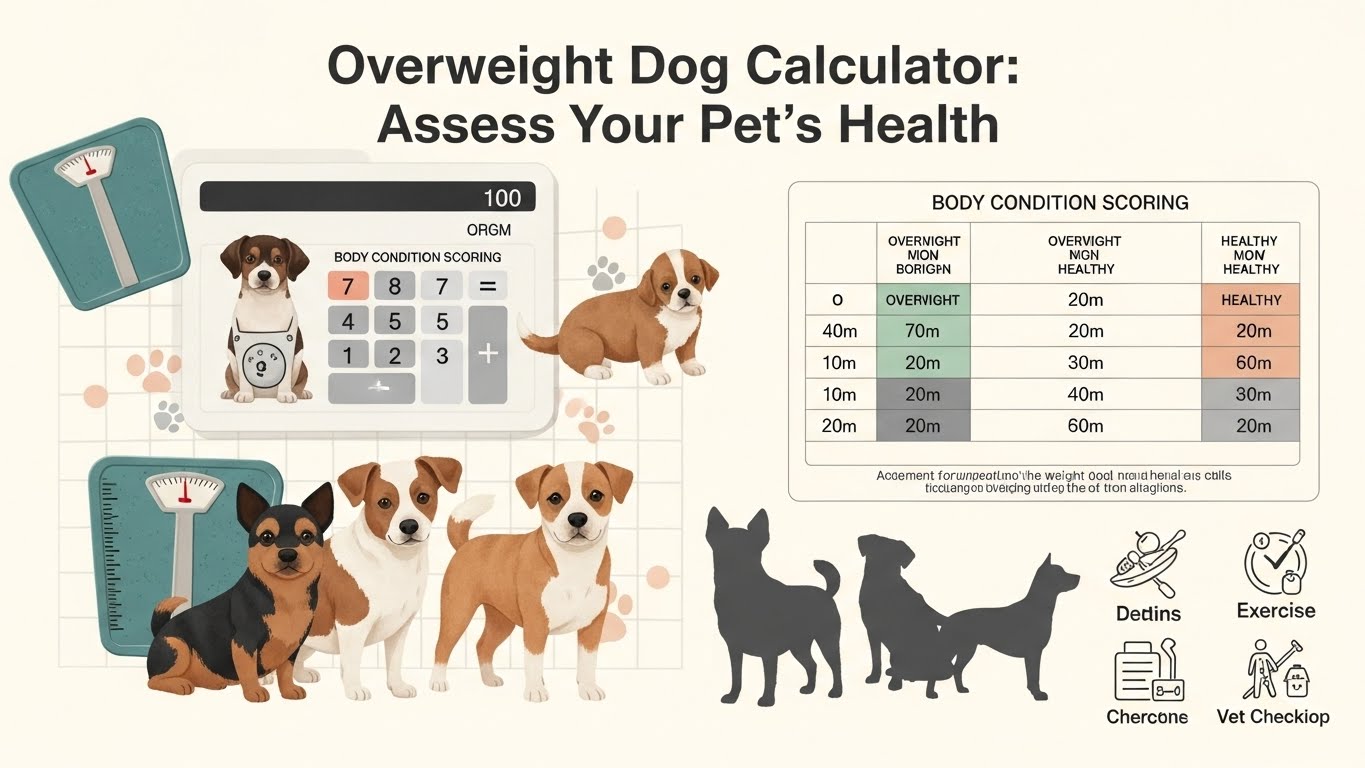
It is painful to see a favourite dog trying to lose extra weight, and this is increasingly common. Veterinary surveys show that close to sixty per cent of the dogs in the United States are overweight or obese. A dog calculator for overweight dogs is a necessary first step in identifying and addressing this health crisis.
These instruments help you objectively evaluate whether your dog is overweight, based on the individual's current weight and body condition score relative to breed standards. I have encountered many owners who were unaware that their dogs were overweight, either because the weight gain progressed slowly or because they matched their dogs with overweight dogs at the park.
An excellent calculator eliminates guesswork and emotion, providing accurate information on your dog's current weight and how much weight he needs to lose to be at his best health.
The Importance of Excess Weight in Dogs
The morbidity of obesity in dogs is much more than skin deep. The risk factors of diabetes, heart disease, respiratory issues, and some types of cancers are highly elevated towards the overweight dogs. The most apparent one is joint stress.
I have seen overweight dogs develop arthritis many years sooner than their fit colleagues, which causes them to lose their mobility and quality of life. The additional weight places mechanical stress on the cartilage and ligaments, which were not designed to bear it. The overweight dogs also lack stamina, cannot withstand heat and have impaired immune response.
What most owners fail to understand is that these are not minor inconveniences but severe conditions that shorten lives. Researchers have consistently shown that dogs kept at healthy weights live, on average, 2 years longer than those kept at obese weights. An overweight dog calculator helps measure the problem and translate ambiguous issues into specific numbers that serve as an incentive to take action.
How Overweight Dog Calculators Work
The calculation of an overweight dog typically uses several evaluation methods to determine whether your dog has exceeded the normal weight range. The crude method compares your dog to breed standards for weight, accounting for gender and age.
Another type of advanced calculator includes body condition scoring, an assessment of physical features such as rib visibility, waist definition, and abdominal tuck. Tools calculate a percentage above the ideal weight to assess the severity of the issue and determine appropriate actions.
An example is a dog that is 15% overweight but not 50% overweight; it will require a different method. The calculator could also provide estimated daily caloric requirements for both maintenance and weight loss, and provide actionable feeding instructions.
Body Condition Scoring Systems
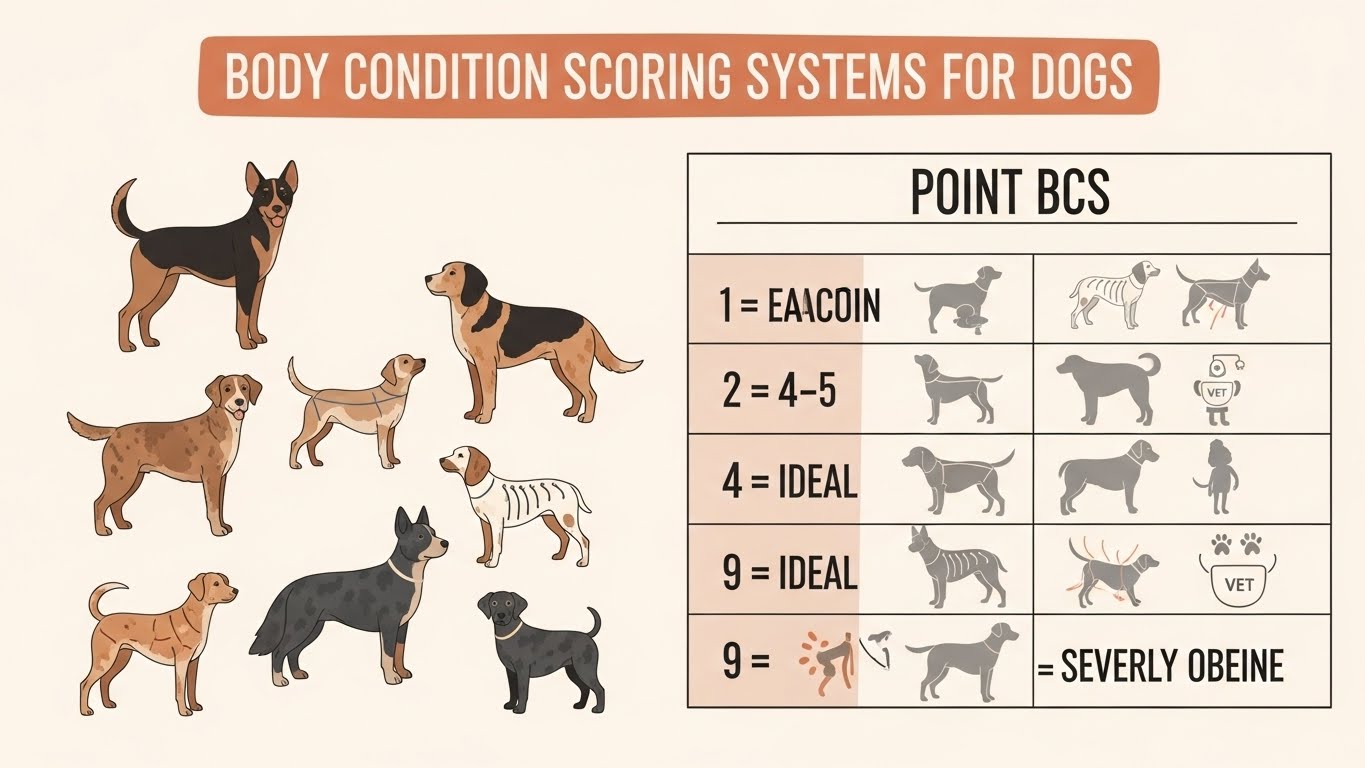
Most quality overweight-dog calculators are based on the Body Condition Score (BCS). This is a nine-point scale of emaciated (1), severely obese (9), with ideal body condition being 4-5. When assessing your dog, you are looking for specific physical indicators. When at a healthy weight, the ribs should be felt without strain or bulging.
The waist should be visible in the upright position, and the belly tuck should be visible in a side view. I have people run their hands along the sides of their dogs — unless you can feel the ribs easily, it means there is too much fat over them.
A dog with a BCS 6 to 7 is fat and can hardly be supposed to have ribs, has no visible waist, and has a low abdominal tuck. The ribs of obese dogs (BCS 8-9) can not be felt at all; there are clear fat beds, and the belly seems to be distended. Accurately rating your dog's body condition makes the calculator's results more meaningful.
Breed-Specific Weight Standards
Breed standards are essential for establishing reference points for overweight-dog calculators. A seventy-pound Labrador can be in excellent health; however, the same weight on a Cocker Spaniel will mean that it is severely obese. There are also calculators with extensive breed databases that will not only tell you whether your dog is overweight but also how far it falls outside normal healthy ranges.
When I evaluate a Golden Retriever, I understand that males are expected to weigh 65 to 75 pounds; therefore, a male weighing 85 pounds is obviously overweight. The difficulty lies in breeds with a broad range of acceptable weights or mixed breeds without standard weights.
When breed standards are unavailable or inapplicable, responsible calculators do not ignore these limitations; instead, they place greater weight on body condition scoring. Other breeds naturally have higher body mass, which is accounted for in the algorithms of some quality calculators.
Computing Ideal Weight and Loss Goals
After an overweight dog calculator is used to determine that your dog is outside the healthy range, it is expected to help set a realistic target weight. This is not always straightforward when relying on breed standards, given individual variation. A dog of naturally large build may weigh much better than a dog of a more petite build of its breed.
I have also developed the ability to combine current weight and body condition score to determine ideal weight. At sixty pounds, a dog with a seven on the BCS (moderately overweight) has the potential to weigh about fifty pounds, which is the ideal weight.
The calculator should then compute the percentage of the current body weight to be lost and generate a schedule. Loss of healthy weight among dogs is one to two per cent of body weight in one or two weeks. To that sixty-pound dog, a half-pound a week will take him to fifty pounds in approximately twenty weeks--five months of regular work.
Calculating Various Dog Sizes by Using a Calculator
Calculators for overweight dogs should account for the significant size disparity among dogs. A three-pound overweight on a Chihuahua is a far bigger issue than three pounds on a German shepherd. Small breeds generally have lower body weight, and therefore, any weight gain can significantly affect their health. I have had ten-pound Yorkies with three pounds of extra weight, or 30% above ideal.
On the other hand, oversized breeds that carry excess weight place greater stress on their joints, as the additional weight increases the load on the skeletal system. A twenty-pound overweight Saint Bernard suffers incredible strain on its joints and knees. Quality calculators adjust their evaluations based on whether you are considering a toy, small, medium, large, or giant breed.
They also adjust weight-loss advice because small dogs have higher metabolic rates and may lose weight faster than large breeds with lower metabolic rates.
Online Resources and Applications
Smartphone technology has dramatically increased the number of landscape in overweight dog calculators. Today, many apps offer comprehensive weight analysis with photo upload features to monitor both visual and numerical improvements. I especially appreciate applications that store historical data and generate graphs showing monthly weight patterns.
Others offer feeding calculators that suggest how much to feed your dog based on the caloric content of your dog's food. Online calculators range from simple input-output tools to complex systems that generate detailed reports. Many veterinary schools provide a free, effective calculator, and the Association for Pet Obesity Prevention does as well.
Calculators are regularly offered by commercial pet food organisations, which, in turn, are biased toward promoting their products. Using multiple calculators and comparing results is the most appropriate approach, as it accounts for consensus recommendations rather than relying on a single metric.
Calculator Results: Accurate Interpretation
There is interpretation involved in what your overweight dog calculator provides. When the final findings show that your dog is 10% overweight, you will be classified as moderately overweight, not obese, yet this is a problem that should be addressed, not a crisis. Obesity that is above ideal by twenty-five per cent or above is a signal of an urgent need for intervention.
Owners may even disagree with a calculator's results because they do not align with their view of their dog. Here, objective body condition scoring is vital. Feel your dog's ribs, and compare the profile to the breed standard photos, not to other dogs you see on the street.
The results of the calculators should be used as starting points for discussion with your veterinarian, rather than as final diagnoses. Other medical causes can lead to weight gain or fluid retention, and a calculator cannot distinguish between these and other medical conditions.
Calculating Calculator Data into an Action Plan
A weight loss dog calculator can only assist you when you take action based on what the calculator gives you. Once you realise your dog needs to lose weight, it is essential to develop a plan to achieve it. Begin with a computation of lower caloric intake, which is usually fifteen to twenty per cent less than the present weight loss, and a gradual reduction.
I suggest weighing the food exactly on a kitchen scale rather than using the included cup, as this will encourage them to eat more. Either take away or severely restrict treats, including the number of calories in the daily total. Most individuals are unaware that a couple of training snacks can account for 20% of a small pet dog's daily calories.
Exercise should be built up gradually, particularly for inactive dogs, to prevent injury. Overweight dogs do not experience significant joint stress, so swimming is a great low-impact activity that provides cardiovascular benefits. Arrange a biweekly weigh-in to measure progress and adjust the plan if weight loss is too fast or too slow.
Typical Barriers to Weight Loss
Despite the calculator's precise results and the dog owners' stated intentions, implementing the weight-management process remains a challenge for many. The greatest challenge I face is inconsistent family food rules: on one side, someone restricts food, and on the other, someone slips up and eats something or takes leftovers.
All the family members should be dedicated to the plan. Another challenge is begging. Dogs learn that persistence pays off, and fat dogs tend to be good beggars because it has worked before. Be unafraid of those imploring gazes by keeping in mind that you are not robbing them of their lives; you are prolonging their days. Others are overfed because of a false notion that equates food with love.
Avoiding food as a means of expressing love, such as spending additional time playing, getting hair trimmed, undertaking training sessions, etc., can help to break this habit. Diet and exercise may not be effective with medical conditions such as hypothyroidism or Cushing's disease. If the calculator's results corroborate that your dog is not losing weight, you should take him to the vet to rule out any underlying issues.
Measuring the Progress and Revising the Strategies
Losing weight is not a straightforward process, and regular check-ins will keep you on track. I suggest weighing your dog every two weeks rather than weekly, so you are not overly frustrated by slight changes that may be due to water retention or digestive timing. Record weights are always taken in the morning before feeding.
Enter new weights in your overweight dog calculator to determine how you are doing compared to expectations. After more than a month of weight loss, re-evaluate the amounts of food you eat - you may have to reduce the food intake or eat more.
In some cases, it is beneficial to vary the type of food; transitioning to a veterinary weight-management formula can be more satiating with fewer calories. This is because taking monthly photos at consistent angles helps you visualise your progress. Body condition scoring should improve as weight decreases. Congratulate yourself when your dog has reduced the amount of body weight lost by 25%, then 50%, gradually reaching the target.
In the Case of Professional Help
Although overweight dog calculators are helpful self-evaluation tools, they are not substitutes for veterinary advice for serious weight issues. If your dog is more than 20% above ideal weight, it is best to have it supervised by a professional. Your vet can rule out any medical reasons for your weight gain and ensure that the changes in your diet do not aggravate any underlying health issues.
They can prescribe weight-loss foods that provide superior satiety and nutrition during calorie restriction. Other veterinary practices have weight-loss programs that include regular check-ins and accountability, which are excellent contributions to success. I have seen such programs work effectively with owners who should be motivated externally and professionally.
For obese dogs with mobility issues, veterinarians can advise owners on pain-management options that allow dogs to exercise while losing weight. It is also essential to seek professional assistance when your dog fails to respond to reasonable interventions. A constant weight despite caloric restriction may indicate metabolic issues; consult a doctor.
Frequently Asked Questions
What should I do if I don't have a calculator to determine whether my dog is overweight?
Test the ribs of your dog- you need not press too hard. Seek an abdominal tuck and a visible waist above and side, respectively. The absence of these characteristics indicates being overweight.
Is neutering a cause of weight gain that needs the use of a calculator?
Neutering slows the metabolic rate by 25-30%, increasing the risk of obesity. Reduce food intake after the process and weigh yourself frequently to prevent weight gain, rather than treating it later.
What is the accuracy of Internet overweight dog calculators?
They provide decent approximations when you feed them good data, although there is individual variation. Use the screening tools in the calculators and corroborate any alarming results with your veterinarian to confirm them.
Assess Your Dog's Weight Today
Use our overweight dog calculator to determine if your pet needs weight management and create a healthy action plan.
Try Our Calculators