How to Use a Dog Feeding Guide Tool Properly
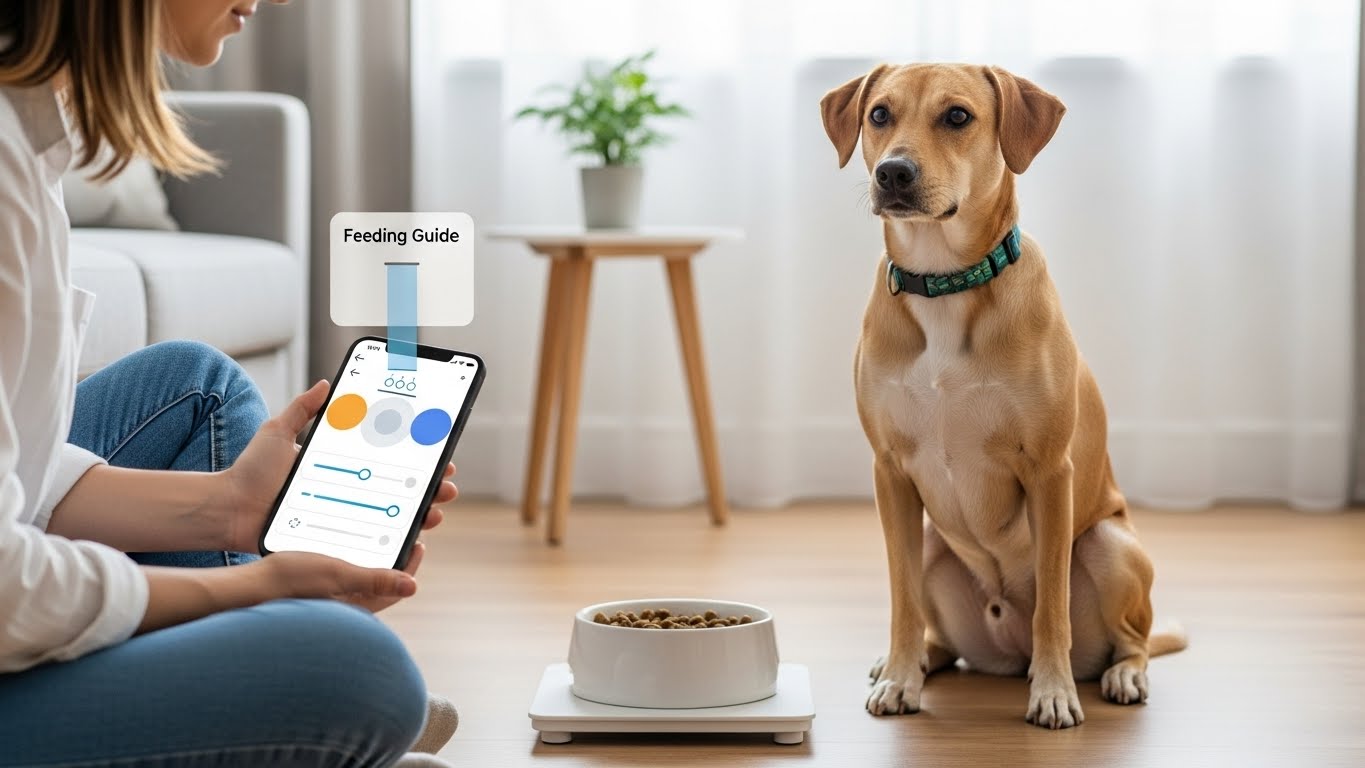
Why Every Pet Owner Needs a Dog Feeding Guide Tool
It might seem daunting to figure out how much of the dog food to feed it when all you are looking at are vague food instructions on boxes of kibble. As a pet nutritionist, I have seen many owners confused about how much food to feed their pets, and they only learned the proper feeding utensils after more than ten years.
A dog-friendly meal calculator or feeding plan eliminates guesswork about what to feed the dog and helps avoid both underfeeding and overfeeding. These applications consider parameters such as weight, age, activity level, and breed characteristics to generate individualized recommendations.
It is crucial to use these resources correctly, whether you are raising an active puppy or caring for an elderly companion. Proper use can significantly impact your dog's overall health and longevity.
What Is a Dog Feeding Guide Tool?
A dog feeding guide is an information resource that helps dog owners determine the appropriate daily feeding amount for their dogs. Such tools may range from printed charts for commercial dog food to complex online software and smartphone apps.
The underlying objective across all formats is to translate your dog's personal traits into practical advice on how to feed it. The vast majority of the tools require minimal information, such as current weight, target weight, age group, and a brief description of activity level.
More developed alternatives include questions about breed, metabolism rate, health conditions, and specific food calorie density. The output typically provides daily caloric needs and recommended portions in cups or grams. Knowing the capabilities these tools offer will help you choose the option that best fits your needs and feeding habits.
Examples of Feeding Guide Tools
There are many feeding guides on the market; each has its own benefits and drawbacks. Conventional printed charts remain popular because they are readily available and require no technical skills. Recommendations made on the bag side provide broad guidance but seldom account for individual variation.
Online calculators posted on veterinary websites deliver more personalized results because they model a variety of variables in their algorithms. The most recent development is smartphone applications, which offer options to track meals, receive alerts, and check weight over time. Certain high-end apps have innovative feeding features integrated to enable automatic portion dispensing.
Activity monitors, which are dog-worn devices, are now being designed to connect with feeding devices that adjust feeding plans based on daily exercise data recorded by movement sensors. They all cater to different needs, so by knowing your priorities, you can narrow down the best option for your household.
Online Calculators and Mobile Applications
The capabilities of online calculators have advanced significantly in recent years, to the point that they have moved beyond mere weight-based equations. There are free calculators from reputable veterinary schools and major pet nutrition organizations that adhere to scientific feeding standards.
They usually involve entering the dog's current weight, ideal weight, and life stage, along with a description of activity, and then provide advanced recommendations. Mobile applications also add to the functionality (through constant tracking and modification).
Most pet food brands offer apps that calculate portions based on their products, accounting for differences in calorie content across formulas. Unrelated applications allow you to add nutritional information to any food item, ensuring universal compatibility.
Nutritional information is automatically retrieved via barcode scanners in many apps, making the process much easier. The ability to check the dog feeding guide tool on your phone makes it easier to use regularly and helps you control portions more effectively over time.
Physical Measuring Tools and Accessories
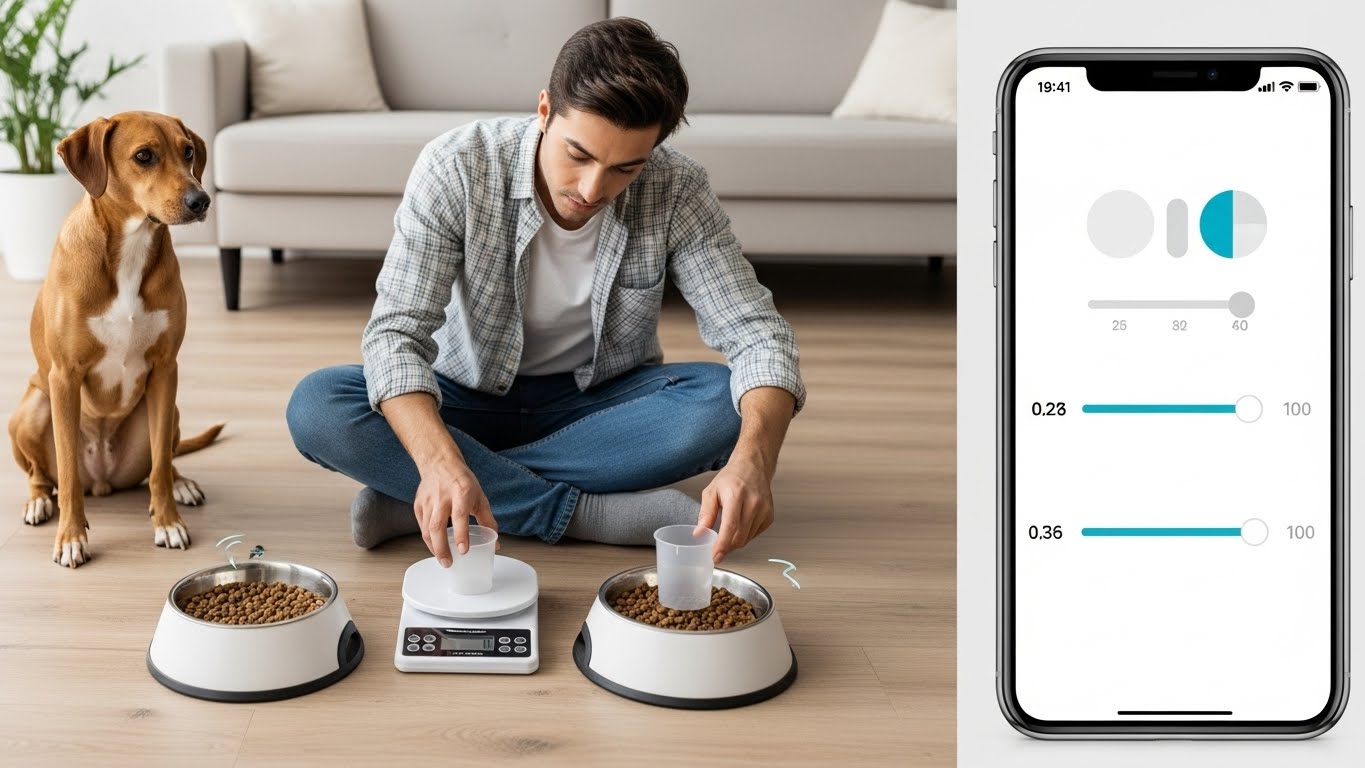
In addition to online monitoring, using tangible gauges is essential for precise feeding. Regular measuring cups can be used, but they should not be used too often, as the scooping method is not always consistent. Special-purpose pet food measuring cups with clearly marked graduations improve accuracy.
Kitchen scales are the most accurate scales, and you can weigh the exact grams that are recommended by the calculators. Some manufacturers produce specialized pet food scales with preset, programmable standard portion sizes. Portion-controlled feeding bowls have built-in provision marks or compartments that hold a predetermined amount.
Slow-feeder bowls are designed to support portion control and eating pace, which can help dogs prone to gulping. Spending money to buy quality physical equipment on the one hand and digital calculators on the other will result in a complete system, where your recommendations on how to feed the dog will be accurate regarding the foods you feed each day.
Primary Considerations These Tools Make
To generate meaningful recommendations, quality feeding guide tools are based on analyses of multiple variables rather than body weight alone. The age factor is a significant influence on caloric requirements: puppies need a great deal of energy to grow as quickly as possible, whereas older dogs use fewer calories as their metabolisms slow. Activity level makes a significant difference, even among dogs with the same weight.
A Bulldog that is a couch-potato requires a lot fewer calories than a working Border Collie despite their probable comparable size. Breed chains affect metabolic baselines and tendencies toward weight gain. Body status is also critical, as obese dogs require an estimated deficit to lose weight without harming themselves. Status Spay and neuter status has implications on hormonal metabolism, which generally decreases caloric requirements by ten to twenty percent.
Some special adjustments are required due to health conditions such as diabetes, thyroid disorders, and kidney disease. These elements are combined into a unified set of tools that provide recommendations across your dog's entire profile.
How to Use a Dog Feeding Guide Tool
To maximize the effectiveness of any feeding tool, it is essential to consistently follow a few practical measures. To begin with, have your dog weighed on an accurate scale rather than estimating its weight from appearance. Record the starting weight and date for future reference. Choose the appropriate age category for your dog, as size affects age limits.
Explain how realistically activity level is gauged in terms of average daily exercise, looking at average days as opposed to peak days. Enter the calorie count for a single cup of the specific dog food, usually printed on the package or available online.
Make an initial set of recommendations based on the dog-feeding guide you selected, and implement them over two to three weeks. Monitor weight changes during this trial period and adjust portions as needed. The practical use of the tool involves performing the original computations and continuously monitoring and improving based on the work outcomes.
Common Mistakes in Feeding Tools
Despite the availability of superior tools, numerous pet owners make avoidable mistakes that jeopardize feeding precision. The most common error is failing to enter the correct weight information, either due to guessing the weight or using outdated measurements. The second overestimation is in activity level, where owners seem to believe their dogs are far more active than reality suggests.
Failing to account for treats, training rewards, and table scraps significantly disrupts the well-calculated portions. Most treats are high in calories; they should be consumed in moderation with regular meals. When the transition stages of a life cycle are overlooked, issues arise: puppies grow up as adults but are fed puppy-sized meals.
Combining foods without recalculating their calorie content may lead to unintentional over- or underfeeding. Some owners compute the calculation only once and never revisit the recommendations despite changes in seasonal activities and weight. The regular recalculation also makes sure that your dog feeding guide tool is not outdated because the world keeps on changing, and so can your pet.
Benefits of Perfect Portion Control
The benefits of proper portion management for dogs can be many, including improved health and peace of mind for owners. Dogs kept at healthy weights have much lower occurrences of joint issues, diabetes, heart disease, and some types of cancers than those that are overweight. Proper feeding would minimize unnecessary food waste and reduce long-term food feeding costs.
Regular meals also help establish consistent bathroom routines, house-training, and day-to-day habits. Any dog given proper nutrition has improved energy, coat quality, and overall health. Weight control eliminates the necessity of costly medical treatment of the health issues caused by obesity.
One advantage of portion control is the ease of feeding multiple people, since each person receives an equal portion. Importantly, proper feeding is a key factor in increasing average life expectancy. Research indicates that healthy-weight dogs live, on average, two years longer than overweight dogs. Investing in proper tool use when feeding your companion yields revenue over the companion's life.
Limitations Worth Learning
Although helpful, feeding guide tools have limitations. Most tools provide starting-point suggestions rather than fixed requirements for individual dogs. Metabolic differences among dogs imply that the same inputs will produce different outputs in the real world.
The tools do not account for undiagnosed health conditions that may alter caloric intake requirements or nutrient absorption. Most standard calculators do not account for environmental factors, such as extreme temperatures, that affect energy requirements.
Profane tools based on average-calorie content could misestimate specialty or prescription meal portions. None of the tools can replace routine veterinary visits, particularly for chronic health conditions in which a dog may require a specific diet. Some online calculators rely on outdated formulae, or algorithms are not scientifically validated. This knowledge of these limitations helps set relevant expectations. Consider your dog feeding guide tool a personal guide, not a set of rules to be followed at all costs, regardless of the consequences.
Selecting an Appropriate Tool for Your Dog
The choice of feeding resources depends on your needs, your comfort, and your dog's specific needs. Comfortable with technology, pet owners usually benefit most from smartphone applications with tracking features and automatic adjustments.
Others of a simple nature might be content with printed charts or simple online calculators for routine cases. Often, dogs with health issues require specialized nutrition and advanced tools to accommodate specific dietary needs. For multi-pet families, some tools are more appropriate than others.
Given the tools currently available, assess whether it can handle your specific food brand or if you need to enter nutritional data yourself. Review user reviews and focus on accuracy reports and usability, not just ratings. Your veterinarian can recommend eyeglasses based on current dietary science. You would not want the most advanced tool on the market for feeding your dog, but the best one is the one you will use regularly.
FAQs
How often should I recalculate my dog's feed portions?
The dog portions should be recalculated after three months for adult dogs, or when there are significant changes, such as a weight change of more than 5 percent, a change in activity level, a medical diagnosis, or a change in the food formula, which may require a new calorie-dense input.
Are online free dog feeding calculators?
Veterinary schools, pet nutrition organizations, and reputable pet food makers usually provide reliable results based on scientific formulas. However, it is essential to check whether individual results may vary.
Is it possible to use the same feed for puppies and adult dogs?
Yes, but ensure your tool includes proper life-stage options, as puppies have very different caloric needs than adults, and setting inappropriate options will give developing dogs unsuitable advice.
Is it appropriate to get minor adjustments based on the treats throughout the day?
Absolutely. Treats should account for no more than 10% of total daily caloric intake, and the calories from treats should be deducted from the usual meal portions when calculating the overall daily calories.
What would happen to my dog if it gained weight even after using the tool?
You can and should cut the amounts by half and see the results in 2 weeks. Dogs have different metabolisms, so the outputs of the tools are only starting points that should be personalised based on the dog's actual real-world response.
Ready to Calculate Perfect Portions?
Use our comprehensive pet feeding calculators to determine the ideal portions for your dog.
Try Our Calculators