How Much Should I Feed My Dog Daily?
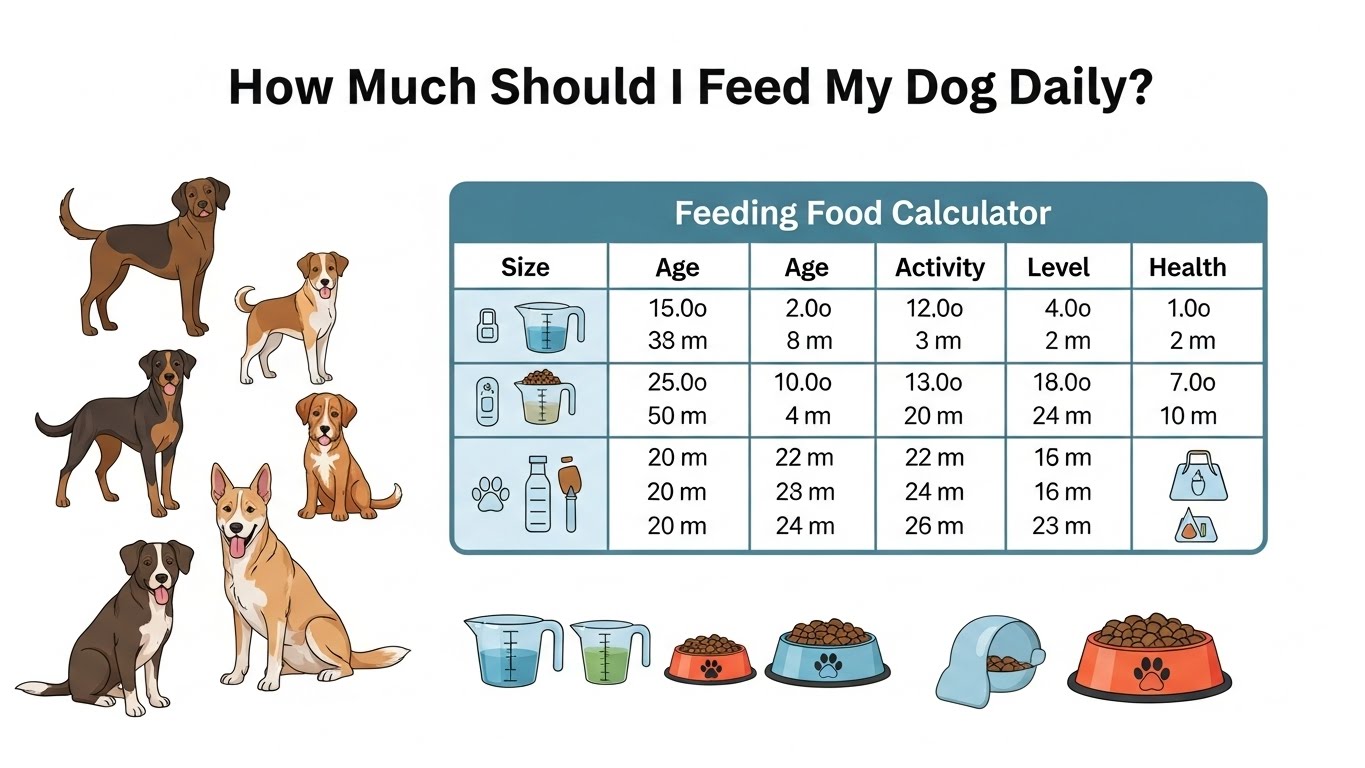
Nutritional Requirements of Your Dog
It is not so much about giving your dog a bowl of food. It is essential to understand their specific nutritional needs, which depend on various factors. I have worked with dogs of different breeds and sizes for many years, and one thing never changes: there is no universal feeding formula.
Your Chihuahua is not going to eat like a Golden Retriever, nor is your couch-potato old man going to need as many calories to use up as a hiking partner. The trick is to frame the feeding instructions as a beginning, not a command.
Most dog owners either overfeed their dogs out of love or underfeed them because of misinformation. That sweet spot will require consideration of its cognitive style, its metabolism, and evolving needs across the different stages of its life.
Beginning With Packaging Guidelines
Each bag of quality dog food includes a feeding chart. Such charts usually segment by your dog's current weight. For example, one may need one to one and a half cups of food per day to keep a 20-pound dog healthy, and three or four cups to keep a 60-pound dog healthy.
Nevertheless, such suggestions can be costly, as manufacturers typically factor in highly active dogs. Provided the dog spends most days lying around, begin with the low end of the recommended range. I would always advise new dog owners to use these charts as a source of education, not as gospel.
They provide a reference point, but you will need to adjust based on actual performance. Keep the bag on standby and review portions every few weeks, particularly in the first year of your dog's life or when there is a significant lifestyle change.
Calculation Based on Dog Size Groupings
A small dog weighing less than 20 pounds would require at least 40 calories per pound of body weight. The average calorie requirement for medium dogs is 30 calories per pound. Big dogs (over 50 pounds) will require approximately 20 calories/lb, and giant breeds may require even fewer calories/lb due to slower metabolism.
A 10-pound Yorkie could eat a half cup of food per day, but the 70-pound Labrador could eat three cups. These calculations have been helpful when planning or preparing home-cooked meals.
It is important to remember that calorie density varies significantly across brands and formulas. A cup of protein-rich, grain-free food has more calories compared to a cup of filler-based kibble. Always check the calorie count on the label of your specific food.
It Matters Much About the Age
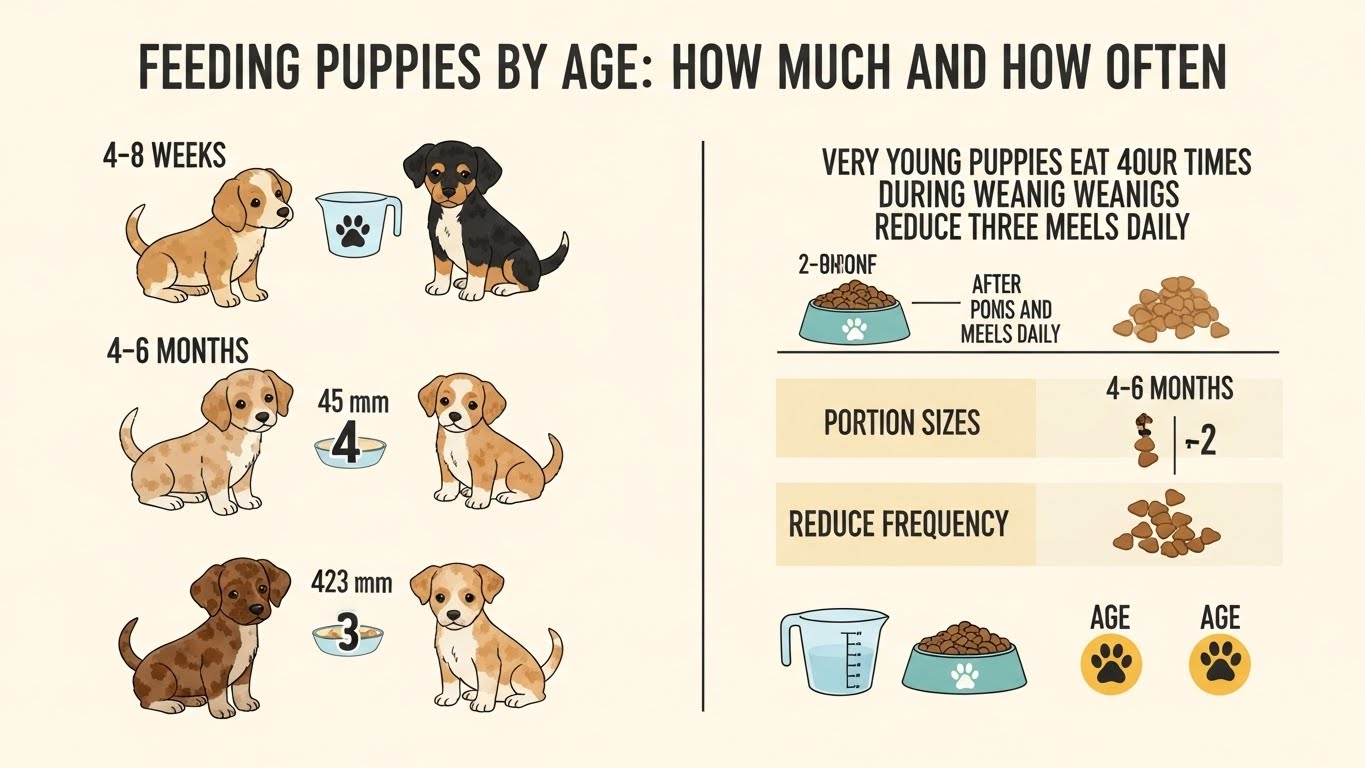
Compared to their size, puppies require a large amount of food because they are growing rapidly. During the weaning period, from four to eight weeks, puppies are expected to eat four times daily. After four to six months, reduce to three meals.
Most dogs begin feeding twice a day after six months. The puppies need approximately twice as many calories per pound as the adults. I have changed a few litters, and the feed quantity will increase by an average of 1 lb per week during growth spurts.
Older dogs, on the other hand, require fewer calories because their metabolism slows and activity levels decline. At approximately 7 years of age in large dogs and 9 years of age in small dogs, I suggest reducing portions by about a quarter unless your dog is very active. Body conditions should always be assessed, not based solely on age assumptions.
Everything Is Different When It Comes to Activity Level
A Border Collie that is working and burning sheep burns a large amount of calories compared to a Bulldog in an apartment. The most significant feeding consideration after establishing baseline needs is the activity level. Running, swimming, or working dogs require an extra 20-40 per cent more food than their non-running counterparts.
I learned this firsthand from my own dogs: my trail-running companion eats close to twice as much as my older homebody of the same breed and size. Weekend warriors are also problematic.
If your dog eats more on weekends and relaxes on weekdays, it is better to increase portions on Friday and Saturday slightly rather than feeding the dog all week. Competition dogs, hunting dogs, and dogs undergoing rigorous training may require performance formulas with higher fat and protein content.
Body Condition Score Examination
It is more important to learn how to estimate the condition of your dog's body than the number on the scale. When standing over your dog, look down and you should see a waist behind the ribs. Touching your sides softly, you should be able to feel the ribs, but not deeply; they must not stand out, only come out.
The belly must be drawn up between the chest and hind legs on the side. This is the way I have checked on my dogs once a week. If ribs are lost during fat removal, reduce portions by 10-15%. If the ribs are too prominent or the hip bones stick out, add food slowly.
Other breeds, such as Basset Hounds, have additional weight, whereas some breeds, such as Greyhounds, appear thin. Spend some time learning how your particular breed should look, and ask your vet if you have any doubts about proper body condition.
Rapid Adjustment of Health Conditions
Medical conditions significantly affect feeding needs. Dogs with diabetes require regular insulin doses at set times to manage blood glucose. Low-protein diets are recommended for patients with kidney disease. Hypothyroidism reduces metabolism, leading affected dogs to gain weight despite normal intake.
I have been dealing with dozens of dogs that had health issues, and all of them needed individual feeding strategies. Food allergies may require limited-ingredient diets that do not necessarily provide the same number of calories as regular formula. Surgery or illness may temporarily require dogs to consume more calories to heal.
Pregnant and lactating dogs require much more energy, up to 50 per cent higher during peak lactation. Always feed according to the veterinarian's recommendations, and never change the diet based on the animal's health status without consulting the veterinarian, as improper nutrition may complicate the condition or disrupt treatment.
The Feeding Schedule Question
Most adult dogs are satisfied with two feedings per day, typically in the morning and evening. Such a diet ensures that one is not hungry all the time, reduces bingeing, maintains regular blood sugar, and reduces digestive complications.
Meal feeding is a daily feeding practice in which dogs eat in one sitting, which can lead to them eating too fast and increasing their risk of bloat, especially in big, deep-chested dogs. I divide my dogs' daily portions into two meals, with a 12-hour gap between them. Others have three smaller meals to make the dog's stomach easier.
As stated above, puppies require more frequent meals. Free-feeding: for dogs with strong self-control, keeping food out at all times typically leads to obesity. I have seldom witnessed long-term free-feeding except among breeds that, in a way, exhibit natural self-regulation. Regular feeding supports housetraining and allows you to track changes in appetite, which may indicate health issues.
Rewards and Training Are Countable
Training treats, dental chews, bully sticks, and table scraps can add up quickly. I have observed that even good owners adhere to feeding guidelines for the latte but still end up with overweight dogs because they forget to account for extras.
The daily caloric intake from treats should be no more than 10 per cent. The maximum calories a medium-sized dog should receive from treats is 800 calories, which is about 6-8 small training treats from various brands. I bring small pieces to my training sessions and cut bigger ones into fragments. Many owners do not realise how many calories some treats contain.
A large bully stick can contain 100 calories or more. If you are generous with extras, reduce meal portions. Even better, give training rewards in small pieces of regular kibble, or make homemade training rewards from low-calorie foods such as carrots, green beans, or ice cubes.
Increasing Food Portions at What Time?
Some life stages and situations will require higher feeding levels. Puppies need a gradual increase in maturity as they reach adult size; this typically takes about 12 months for small breeds and 18 to 24 months for large breeds. Around the fifth week, pregnant dogs require more food, and nursing moms require much more during the lactation period.
In case you have exercised your dog a lot more than usual: you have started to run or visit the park every day with your dog, you should add 10-20 per cent more to the food and observe the body status. Dogs that are outside in cold weather expend additional calories to maintain body temperature.
My dogs also receive slightly more portions during winter. Your veterinarian may recommend temporary increases after surgery or illness to help you recover. Always introduce change over several days to avoid upsetting your digestive system.
Signs You're Feeding Too Much
More than 50 per cent of American dogs are obese and have joint issues, diabetes and reduced life expectancy. Clearly, it is not easy to feel the ribs; there is no visible waist, a waddling gait, unwillingness to exercise, and excessive panting. Weight gain occurs slowly, so it can go undetected.
I recommend monthly weight checks, particularly for smaller dogs, where a 1-pound change is a large percentage of their weight. Other signs of overfeeding that are not readily apparent include soft stools or increased stool volume. If your dog is producing excessive waste, they may be consuming more than they can digest.
Certain dogs fed too much appear to be starving because the food they eat is low in carbohydrates. Consider giving them higher-quality, protein-rich food that may satisfy them more with smaller portions before increasing the amount of food.
Indications of Insufficiency of Feeding
Underfeeding is less common but still an issue. Bones of the ribs, spine, and hips are visible, indicating that a person is not well fed. A dull coat, constant food-seeking, and low energy over an extended period are indicators that your dog requires more. I also adopted a rescue dog that was underfed, and within weeks, with additional food, her energy and coat quality improved.
Puppies that are not well fed have growth rates below breed standards. The fact that the weight is decreasing despite a normal appetite is cause for alarm. The vet should address it, as it may be symptomatic of parasites, diabetes, or other health problems, not just plain underfeeding.
Very active dogs may require astronomical quantities of food - I have seen working dogs eat as much as twice the usual amount of food for their size. If your dog is in good shape but appears constantly hungry and is losing condition, add 10 per cent to their portions each week until you reach the ideal body condition.
Food Quality Counts As Much As Numbers
The high digestibility of premium foods will help you feed less than with low-quality foods. I have alternated between dogs of food and observed a 20-30% variation in food portions to maintain a constant weight.
Foods that contain real meat as the main ingredient, have a low filler content, and provide balanced nutrition, offer more calories per cup. Dogs are fed cheap foods containing corn, wheat, and by-products with lower nutritional value, so they need more food, resulting in more waste.
When calculating how much to feed, keep in mind that high-quality food, though more expensive at first, can be cheaper over the long term when you feed less. Review ingredient labels and select foods based on your dog's life stage. The nutritional and calorie density of puppy, adult, and older formulas differ to meet the needs of specific cases.
Frequently Asked Questions
What is the number of cups that I should feed my dog?
It is based on size, age and activity. Small dogs should have between half and one and a half cups of food a day; medium dogs, one and a half to three cups a day; and large dogs, three to five cups a day, divided into two meals.
Can I feed my dog once a day instead of twice?
Although it may be possible, the healthiest option is twice-daily feeding of most dogs. It curbs overeating, helps reduce stomach complications, and lowers the risk of bloating, particularly in large breeds.
Is it necessary to adjust food quantities for an ageing dog?
Yes, older dogs tend to require 20 per cent fewer calories because they are slowing down. The amount of food a puppy needs is much higher than that of an adult and continues to increase as they age.
Why is my dog always hungry?
Some dogs are food-driven and will always appear hungry. Pay attention to the body's state, not behaviour. Make sure you are eating nutritious foods, and add low-calorie vegetables to increase volume.
How do I know whether I am feeding the right amount?
Check body condition weekly. The ribs should not be difficult to feel; there should be a waist when you are standing over them, and a belly tuck when you are on the side. Tune the portions upon these observations.
Calculate Your Dog's Ideal Feeding Amount
Use our comprehensive dog food calculator to determine the perfect portion size for your pet's optimal health.
Try Our Calculators