Build a Dog Workout Planner That Actually Works
Why Your Dog Needs a Structured Exercise Plan
Fifteen years in the dog business and four dogs of my own, I have seen many pet owners become overwhelmed by a single, simple question: How much exercise does my dog really require? The answer is not simple, which is why the dog workout planner will be handy. Most dogs do not receive sufficient physical activity, leading to weight gain, behavioral issues, and reduced lifespan.
I have also observed overactive Labrador Retrievers who became calm immediately after their owners implemented exercise programs. The same thing has happened to me: stressed dogs grow into calm, sane companions, with their energy properly channeled into healthy activities. A plan will eliminate speculation and provide both you and your pet with peace of mind.
Knowing The Fitness Demands of Your Dog
Each dog has distinct exercise requirements based on factors such as genetics, current health, and temperament. Tremendous physical stimulation is required of a Border Collie on a farm as compared to a French Bulldog in an apartment in the city. Knowledge of these minimum requirements is essential to any successful dog workout plan.
As a rule, the daily exercise of a dog may range between thirty minutes and two hours, although this is a wide range. Working breeds such as Australian Shepherds may be destructive when not exercised daily. In contrast, brachycephalic breeds such as Pugs typically require shorter, less vigorous exercise by nature due to their smaller airways.
I always advise new dog owners to note their dog's behavior after exposure to varying levels of activity. A dog that is a happy one is usually a tired one, but an overworked one may be a weary one.
Exercise Requirements (Breed-Specific)
The breed is essential in determining your dog's fitness program, but to be on the safe side, it is best to monitor a mixed-breed dog's nature. Sporting breeds such as Retrievers, Spaniels, and Pointers are geared toward an active lifestyle and are typically active in swimming, retrieving, and running.
Collies and German Shepherds are herding breeds that require both mental and physical stimulation; as such, agility training or herding balls are a good option. You will find that small breeds such as toy breeds are often overlooked because their owners assume small equals low energy. In contrast, several terrier and miniature breeds exhibit high stamina.
Large breeds such as Great Danes and Mastiffs are moderate exercisers, but precautions are needed to prevent joint damage. A Vizsla I worked with had an owner who was at a loss because his dog was destructive. We started running it every day for more than ninety minutes, and the behavioral issues disappeared.
Age and Health Profiles
Puppies, adults, and seniors need their own unique exercises in your dog workout planner. Puppies below the age of twelve months should not be allowed to participate in activities characterized by sustained running and jumping because their growth plates are still prone to injury.
The overall recommendation is 5 minutes of exercise per month of age, twice daily. Adult dogs carry the greatest workout capacity, yet they should always develop endurance slowly. Older dogs need activity more than ever, but you will need to consider arthritis, reduced strength, and possible heart disease.
I recall modifying my German Shepherd's routine as it grew older: instead of hour-long walks, I took three shorter walks and did some gentle swimming. The most crucial step before starting any new exercise routine is to consult your veterinarian, especially for dogs with a history of health problems.
Key Areas of a Dog Workout Planner
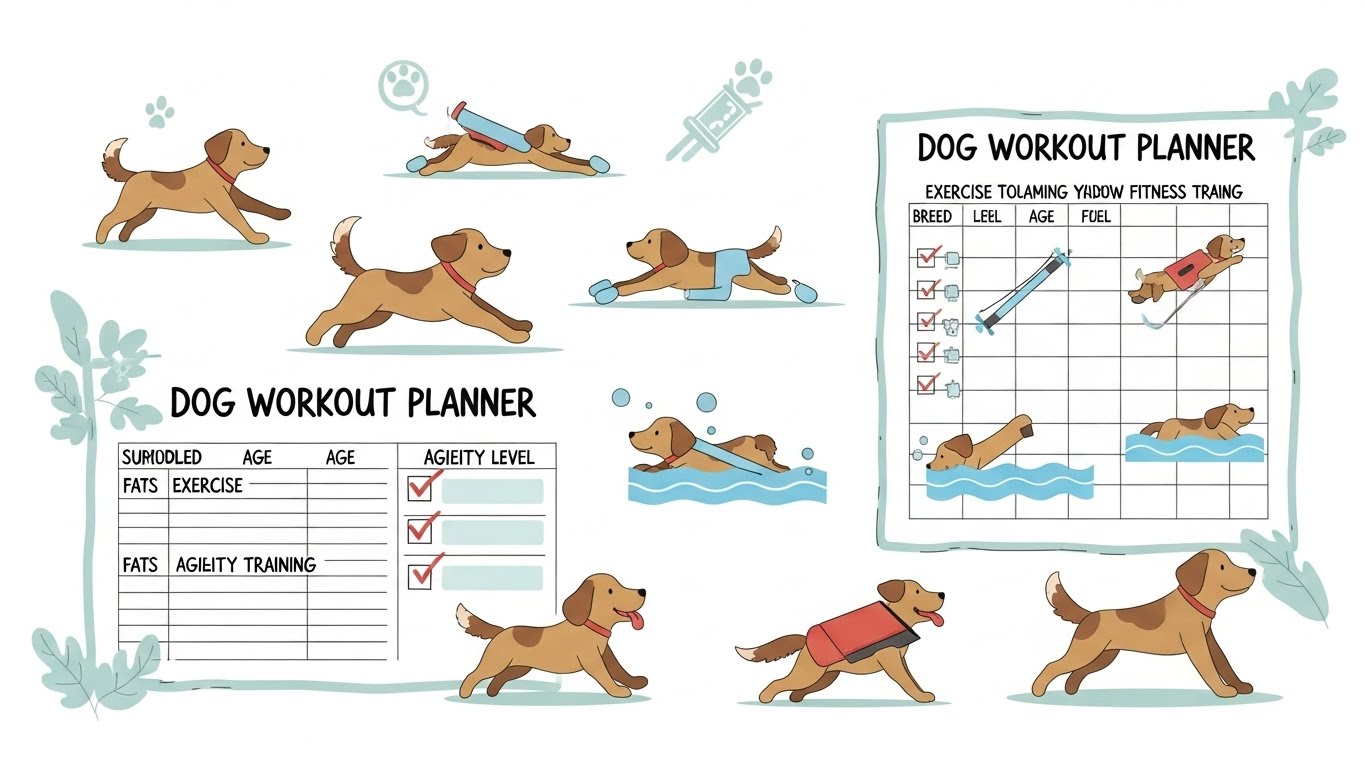
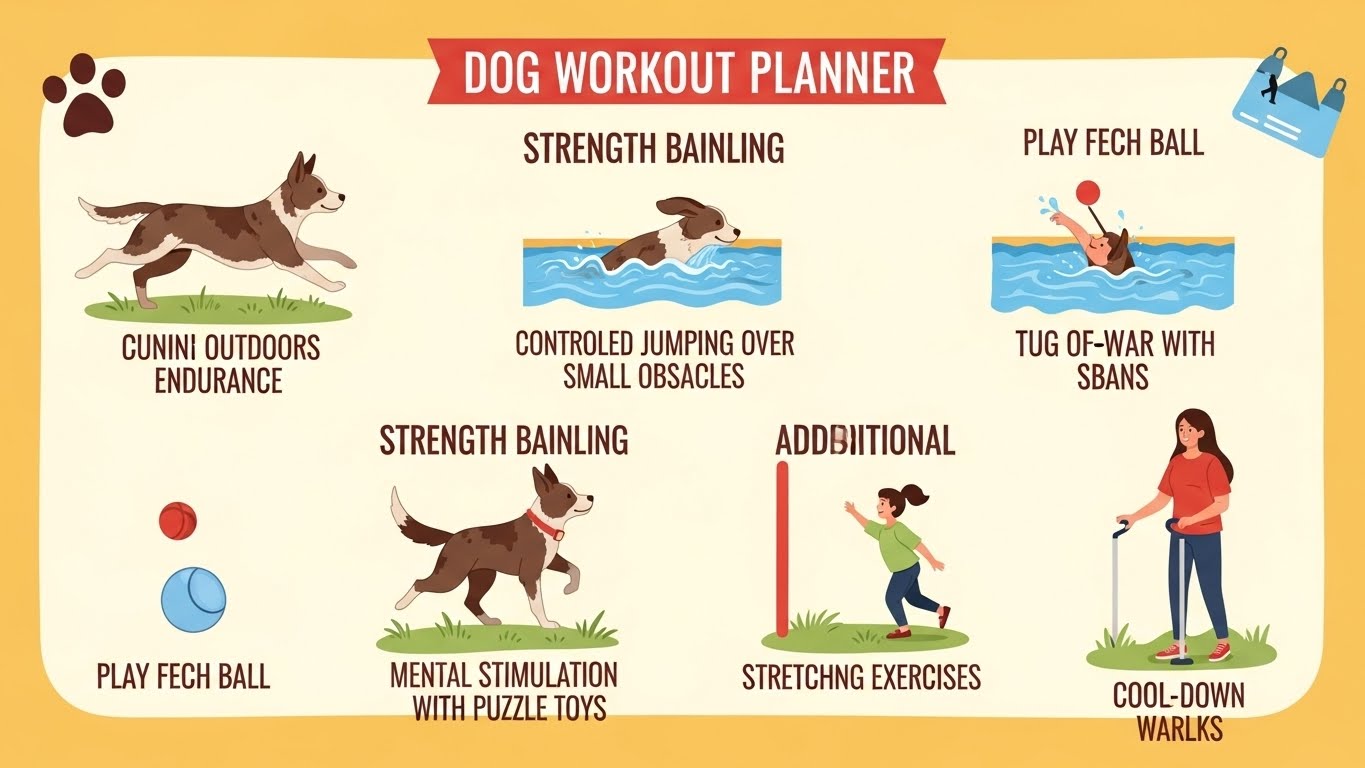
The efficient dog workout planner includes any additional components they may need beyond daily walks. Add activities that increase heart rate, such as running, swimming, or playing fetch, to build endurance. Strength-building exercises may include walking up hills, jumping under control, or tug-of-war, which engages the major muscles.
Puzzle toys, training, and nose-work activities that tire the brain should receive equal attention. Rest days are as important as working days and help the muscles recover and avoid burnout. My planning is based on diversity, and dogs cannot get bored following the same schedule.
Monitor exercise duration and intensity, and how your dog responds, to determine the most effective approach. Extreme weather conditions should include indoor options if outdoor sporting activities are deemed risky.
Exercise Schedules Sample (Per Week)
Creating actionable plans is one way to turn good intentions into consistent action in your dog workout planner. For high-energy breeds, a sample week might include: Monday - 45-minute run; Tuesday - training exercises; Wednesday - hiking; Thursday - agility or dog contests; Friday - long walks; and weekends - extended exploration.
Dogs of medium energy may follow similar patterns with shorter durations and lower intensity. It is all about consistency, not perfection. Setting specific time slots for workouts significantly improves follow-through. Early-morning sessions are highly effective because they start the day on a positive note for both dogs and their owners.
However, those with busy careers may prefer evening workouts, which can help dogs settle down for better sleep.
High-Energy Breeds Schedule
Dogs such as Huskies, Border Collies, and Weimaraners require rigorous training, which can be overwhelming for first-time owners. These breeds usually need one to two hours of physical and mental activity each day. The early activities must incorporate twenty to thirty minutes of running or vigorous fetching, followed by training activities.
Midday sessions can involve puzzle toys or backyard activities. Long walks, swimming, and dog park training are better in the evening. Weekend activities may include trail running, dock diving courses, or scheduled events such as flyball.
I was working with a Border Collie whose owner initially struggled to manage his intensity. After implementing this system, his undesirable habits, such as excessive barking and furniture damage, vanished within three weeks. These are breeds that demand dedication and a considerable amount of time.
Senior Dogs and Exercises Not to Strain
Senior dogs benefit from continued exercise; however, your dog's workout planner must adjust to their new abilities. Low-impact activities, such as swimming, provide substantial cardiovascular benefits without straining the joints. Long walks are replaced with shorter walks due to reduced stamina.
Flexibility and comfort are achieved through gentle stretching and range-of-motion exercises. The more physically restricted a dog is, the greater the need to stimulate the mind; therefore, use scent games and mild training exercises. Also observe changes indicating pain or fatigue, such as excessive panting, unwillingness to continue, and limping.
My 14-year-old Labrador still enjoys daily walks, though we now walk only three times for 20 minutes instead of an hour-long walk. Warm-up before exercise and cool-down stretches after exercise help maintain smooth joint function in older dogs. Older dogs should not be overstimulated or pushed beyond their comfort zone, and they need soft resting surfaces.
Measuring Your Goal and Making Revisions
A cost-effective way to work out is to check your dog's reaction to exercise; this will also help you shape your dog's workouts in your dog workout planner over time. Note daily activities such as type, amount of time, and intensity of activities alongside notes regarding the energy levels and behavior of your dog.
Monthly weight monitoring helps assess the balance between exercise and nutrition. Positive results, such as reduced anxiety or destructive behavior, are considered evidence of your program's success. Favorable changes in the body, such as muscle development, improved stamina, and easier breathing during work, are positive developments.
GPS trackers that calculate distance covered and dog-specific activity monitors are now available. Nevertheless, basic notebook tracking suits most owners. I review my dogs' exercise records weekly and make minor adjustments based on weather, my schedule, and their responses. With seasonal changes, plans may shift, as summer heat and winter cold can affect safe exercise.
Common Mistakes to Avoid
The vast majority of good owners make avoidable mistakes when applying their dog exercise planner, which can lead to injuries or frustration. First on my list is overexercising puppies, as eager owners push young dogs to the point of permanent joint damage.
Clearly, ignoring the weather can lead to heat stroke in summer or frostbite in winter. Inconsistency is very frustrating for dogs and their owners, and behavioral issues often arise when exercise is infrequent rather than consistent. Failure to stimulate the mind renders dogs physically exhausted but mentally agitated.
Comparing your dog to others sets unrealistic expectations, because each dog is different in its capabilities. Skipping warm-ups and cool-downs increases the risk of injury, especially for older or poorly conditioned dogs. I have seen owners push their dogs when they display clear distress indicators, prioritizing the schedule over safety. You must recognize when your dog actually needs rest, rather than being reluctant to get going.
Planning Resources and Tools
Several practical tools can help with minimal investment. Brands such as FitBark and Whistle offer fitness-tracking collars that provide activity data and can be used to set baseline measurements. Dog activity apps available on smartphones help schedule activities and provide exercise recommendations.
Simple spreadsheets or journals are ideal for owners who prefer analog styles. Mapping apps are an excellent way to measure routes and ensure proper distances are covered. Mental stimulation during physical exercise sessions can be enhanced by using treat pouches and training equipment.
Start small with paper-based tracking before investing in technology, since many owners believe simple methods are sufficient. Local facilities such as dog parks, hiking trails, and swimming areas expand your workout options. Professional services, such as veterinary sports medicine specialists, can test athletic dogs or rehabilitate injured dogs. Developing relationships with other dog owners provides practical tips that no planning tool can offer.
Enjoyment and Long-lasting Workouts
The most advanced dog workout plan is ineffective if you and your dog cannot enjoy it over the long term. Variety prevents monotony for both species involved, so change activities and locations regularly. To build support and foster connections, engage family members with you and your dog and share the responsibilities.
Do the things you love instead of forcing through activities you hate. Celebrate all the ways you have progressed, knowing that consistency is more important than perfection. Community activities such as dog parks, group hikes, or organized sports provide fun and socialization for your dog.
Make your plan weather-proof and have a backup plan using indoor activities such as treadmill training, stair climbing, or interactive play. I have been exercising with my dogs for more than 10 years because I enjoy spending time with them. The way your dog is enthusiastic reflects your own enthusiasm; therefore, treat exercise as a time of enjoyment, not a forced obligation.
FAQs
How often do I exercise my dog per day?
Most dogs benefit from two or more walks per day, but the frequency and duration depend on the breed, age, and health. Young, vigorous breeds may require three or more activity periods.
Can I use the dog workout planner for multiple dogs?
Yes, but you will have to meet the needs of individual dogs. Some activities are suitable for group exercise, while others require individualized attention, depending on individuals' fitness levels.
What does it mean if my dog is not willing to exercise?
Resistance may reflect pain, illness, or boredom with current activities. Discuss any underlying health concerns with your vet to eliminate these factors and try other forms of exercise to identify activities that motivate your dog.
Can I exercise my dog too much?
Yes. Symptoms include constant panting, reduced desire to move, limping, and prolonged recovery time. Dogs should recover within 30 minutes after regular exercise sessions.
When should I walk my dog relative to meals?
It is advisable to wait at least one hour after a meal before engaging in vigorous exercise to avoid bloating, especially for large, deep-chested dogs. Light post-meal walks are generally safe.
Ready to Create Your Dog's Perfect Workout Plan?
Use our comprehensive calculators to design the ideal exercise routine tailored to your dog's needs.
Try Our Calculators