Dog Size Calculator: The Growth of Your Puppy
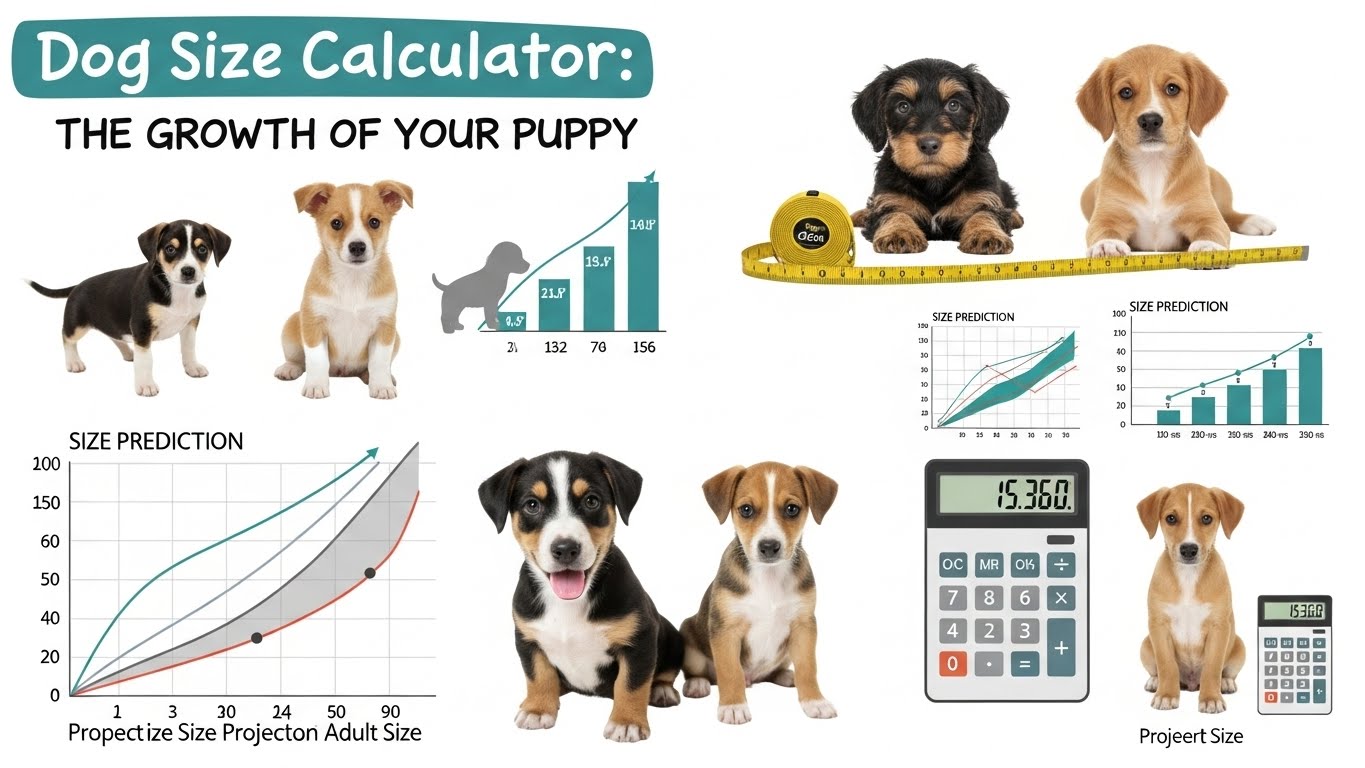
Setting your puppy's size may be a guessing game, but dog sizing calculators have made it far more predictable. These applications combine veterinary studies, breed statistics, and growth trends to predict your puppy's adult size and weight.
I have seen dozens of puppy owners face dilemmas about the size of crates they plan to purchase, how large crates will fit their growing puppy, and how much food they will spend in the long run. A dog size calculator is a website that addresses these issues.
You provide your puppy's current measurements, age, and breed, and it generates predictions based on the data. There is no foolproof calculator, particularly for mixed breeds. But the more you understand how they work and which factors affect their accuracy, the more informed your decisions will be about your dog's future needs.
What Size Calculators of Dogs Measure
Dog size calculators typically use two key values: weight and height at the shoulder (withers). Predicted weight assists in nutritional planning, purchasing equipment, and gaining knowledge of exercise needs. Height is essential for breed identification and other show standards, as well as for practical reasons, such as whether your dog can fit comfortably in your car.
Specific high-tech calculators can also determine chest length and girth, which helps select an appropriately fitted harness and carriers. The estimates are based on years of trend records for breed growth.
When I enter data about my Border Collie puppy at three months of age, the calculator does not guess; it consults its database, which contains data on thousands of Border Collies observed growing into adulthood, and applies the average growth pattern to my case.
The Science of Growth Projections
Calculators for their dog's size are not magic; they are based on certain biological principles that apply to canines. The growth rates and schedules of various-sized classes of puppies vary significantly. Toy breeds may be ninety per cent of their adult size at six months, whereas giant breeds keep growing until the age of two.
The calculators use algorithms that account for breed-specific growth curves. Skeletal growth is predictable: long bones develop in growth plates that close at genetically programmed times. I have learned that a puppy's weight at certain milestone ages is strongly correlated with its adult final weight.
An example of such a breed is the many medium breeds that weigh approximately half their adult weight at sixteen weeks old. The calculators use the same correlations, but they apply them to the specific breed or breed mix you identified, yielding more particular predictions rather than general ones.
Entering the Correct Data to Improve the Results
The effectiveness of any dog size calculator will be as effective as the accuracy of the information that you give. It is a significant difference to weigh your puppy on an accurate scale rather than estimate its weight. For small puppies, I weigh myself with the puppy on the kitchen scale and subtract my weight.
The measure of height should be at the withers, which is the topmost point of the shoulder blades in a standing position of the dog. Head height is often miscalculated, distorting the findings. The age should be exact, particularly for young puppies, where a week or two can make a difference in computation.
If you do not know the precise date on which the puppy was born, your veterinarian can do some age projection by looking at the development of teeth. Identifying breeds is a significant challenge, and for mixed breeds, DNA testing provides superior information than the naked eye.
Breed-Specific Calculation Methods
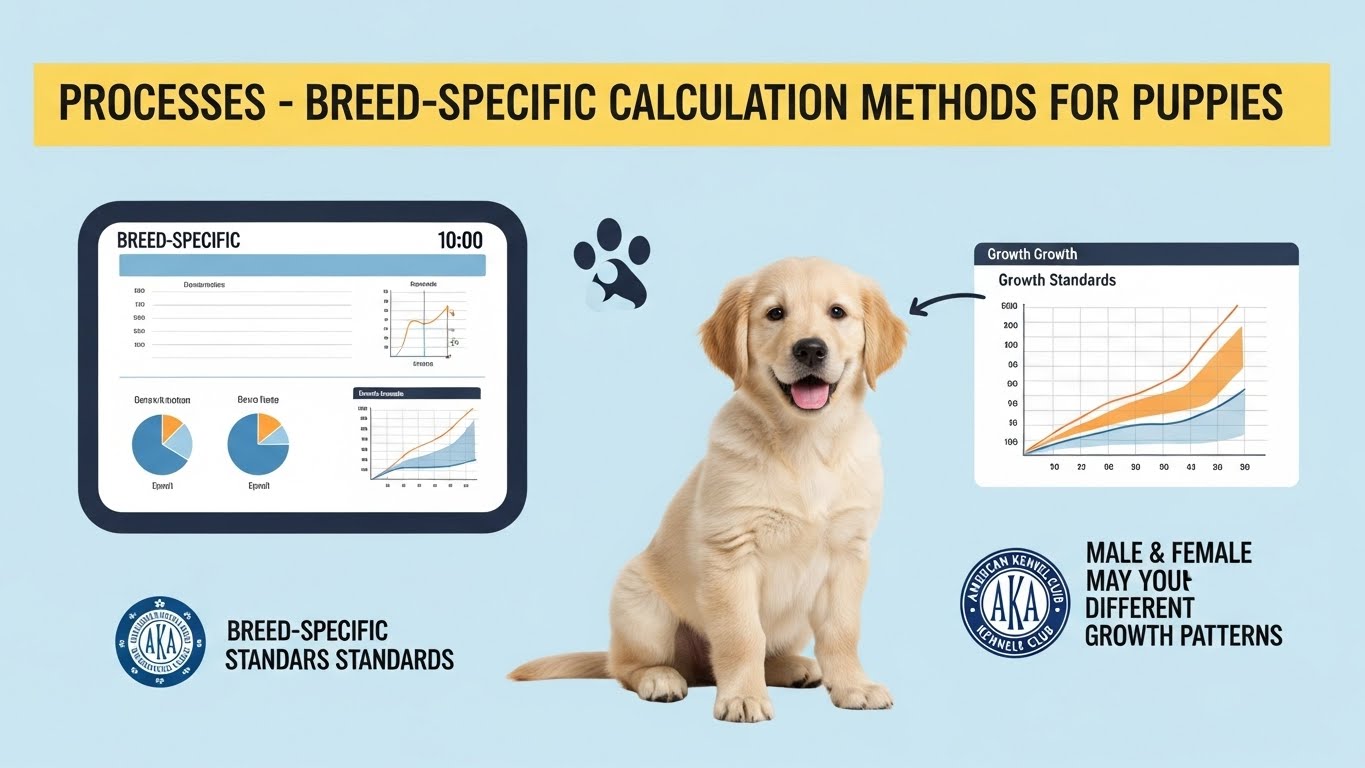
Calculators that use breed-specific formulas. For clients with a registered Golden Retriever, the calculator can reference breed-specific standards and growth patterns. Records from the American Kennel Club and similar organisations indicate that male Golden Retrievers typically weigh between 65 and 75 pounds and are 23 to 24 inches tall.
The calculator uses current measurements and progresses based on the previous Golden Retriever growth curve. Multiplication factors vary across breeds.
The weight of a Labrador puppy at 8 weeks may be multiplied by any other factor than that of a Beagle since the growth rates of the two are very different. This breed-specific method is used because generic calculators that treat all dogs identically are unreliable.
Mixed Breed Dog Sizes Calculations
Calculations for mixed breeds are more complex because they combine multiple genetic influences. When both parent sizes are known, other calculators estimate the parents' average size by considering the breeds typically dominant for the size trait. I have observed Labrador-Poodle hybrids in which the Poodle size genotype overrode the fact that one parent was much larger, the Labrador.
Calculators can also request parent details, whereupon they do not show any information and create a weighted forecast of which breeds your puppy most closely matches. Physical characteristics such as bone density, paw size relative to body size, and muzzle length indicate which breeds are the most significant contributors to the blend.
DNA tests have changed the calculations for mixed breeds and revealed specific breed percentages. A computer that realises that your puppy is 40% German Shepherd, 30% Border Collie, and 30% Australian Shepherd can make more precise projections than a human can.
Adjustments in Calculations Based on Age
A dog size calculator based on user age significantly affects prediction accuracy. The six- to eight-week early calculations are less reliable because significant growth lies ahead. Individuals usually treat very early estimates as ballpark figures rather than exact forecasts. At 12 to 16 weeks, small and medium breeds are more accurately assessed, as they are well into their growth pattern.
Big breeds are better estimated at 10 months, when the growth rate stabilises. It is still not entirely predictable until ten to twelve months, as giant breeds have a long growth period. Many calculators do not provide a single number but rather a range, and that range narrows as the puppy ages.
By using the calculator several times as your puppy continues to grow and comparing the results with actual development, you can determine how your dog is performing: above or below the predicted curve.
Digital vs. Paperwork Calculation Tools
Dog size calculators are available in various formats, each with its own pros and cons. Online calculators and mobile applications are convenient and typically include large databases of pre-defined formula-selection algorithms. I like apps that store historical data and let me use it over time to track my puppy's growth against the app's predictions.
These online applications typically include graphical weight-tracking charts and reminders to take weekly weight measurements. Published formulae are good when you are familiar with calculus and have a good breed-specific multiplier. Specific veterinary clinics have built their own calculators based on their patient data, which can be more precise for breeds in your area.
Breed-specific calculators that apply to a single breed (e.g., a Labrador calculator) tend to be more effective than generic multi-breed calculators. Using multiple calculators and comparing results is usually the most effective way to determine the consensus range, rather than relying on a single tool's output.
Structural Influences on Size Other than Genetic
Although genetics determines the framework, environmental factors may affect whether a dog attains their genetic potential. Diet during crucial stages is critical. I have also observed puppies from the same litter differ in adult size, with one being 10 pounds heavier due to better feeding.
Nevertheless, overfeeding does not make the skeleton larger; it merely produces an overweight dog of whatever size genetics determined. Puppyhood health problems, such as parasites, digestive issues, or permanent growth retardation due to chronic illnesses.
Premature spaying or neutering can delay growth plate closure, potentially resulting in slightly greater growth in neutered dogs than in unspayed or unneutered dogs. These factors are often not considered in standard dog size calculators, which also assume proper nutrition and good health. This is why actual size may not align with predictions, even when calculations are based on accurate data.
Practical Planning with the Help of Size Predictions
Having size estimates in the calculator makes practical applications much more intuitive. Knowing your puppy will likely reach 50 pounds helps you purchase the appropriate crate size from the start, rather than buying a new one each time it grows. This is a tip I always give when they are young: get the size they are projected to be when they grow up, then divide it by the dividers.
The vehicle factor is essential: the dog expected to grow to seventy-five pounds cannot travel in the same way as a twenty-pound dog. Predictions about size can be influenced by housing decisions, particularly when it is a rental with a weight limit. Food consumption is proportional to size; therefore, better budgeting is required.
Even the training methods vary: the approach to training a large-breed puppy not to jump on people is more critical than for small breeds. Even social choices, such as dog daycare compatibility, are partly based on size. Calculators will help you prepare correctly, rather than being taken by surprise halfway through the year.
Identifying Calculator Limitations
The best dog size calculator may also have limitations that responsible dog owners should be aware of. There will be individual differences within each breed; that is, some dogs will naturally fall outside the average range, regardless of how precise your inputs are. I have heard of purebred dogs with excellent bloodlines that just happened to be smaller or larger than the overall breed size, with no justification.
Calculators cannot forecast or account for health problems that may affect growth. They also cannot account for the chance genetic combinations that occur in mixed breeds, whereby a puppy may inherit size genes not from the parent but from the grandparent.
The environmental factors I indicated above are not accounted for in the standard calculations. Most importantly, calculators are not specific; they are probability-based. A predicted adult weight of 55-65 pounds is typical, though your individual dog may be 50 or 70 pounds and still be completely normal and healthy.
When to Visit Your Veterinarian
Calculator software for dog size is helpful, but does not replace the role of a professional veterinarian. In case the growth of your puppy does not follow the forecasts, as it starts to grow much faster or slower than the forecasts, it is time to visit the vet. Developmental abnormalities may indicate thyroid, growth hormone, or nutritional issues.
No calculator can perform physical exams and compare your puppy to its general developmental milestones better than your vet. I bring growth charts to every puppy vet visit, and we discuss the puppy's development and whether it appears normal. Veterinarians may also take radiographs to assess growth plate development if there are concerns about premature closure or delayed ossification.
In giant breeds, veterinarians may recommend specific feeding protocols to prevent excessive growth, which can strain developing joints. Professional advice means that size predictions do not waste time or cause unnecessary anxiety; instead, they enable you to create informed plans without leading to the adoption of inappropriate interventions.
Tracking Growth Over Time
A dog size calculator is most effective when used with constant monitoring. I weigh my puppies every week and record the results in a simple spreadsheet, along with the calculator's projected values at each age.
This will create a visual growth curve for my puppy, either above, below, or at the intended level. Growth spurts and plateaus are regular and not cause for concern, but they can be easily detected through regular monitoring. It also shows whether the early predictions are coming true or need revision.
Some grow steadily, while others are irregular, with periods of high growth followed by periods of low growth. Follow-up helps identify normal variation and potential issues. When you finally achieve the adult size, it is intriguing to compare the final measurements to initial estimates and use them to see which calculator techniques were most useful to get you closer to your future puppy size estimates.
Frequently Asked Questions
What is the level of accuracy of dog size calculators concerning mixed breeds?
Mixed-breed estimates are as inaccurate as purebred estimates, with a typical accuracy range of 10-20%. DNA testing is highly accurate because it determines specific breed percentages used in calculations.
Can we have a dog size calculator for rescue puppies?
Yes, but there is an inaccuracy due to unknown parentage and imprecise age. Physical examination, paw size, and tooth development help veterinarians determine age, which is used as input to the calculator.
Are male and female puppies to be calculated differently?
Absolutely. In most breeds, males are 10-15 per cent larger than females. The quality calculators require gender to be entered because the growth formula differs between the sexes.
Calculate Your Puppy's Size Today
Use our dog size calculator to predict your puppy's adult size and plan for their future needs with confidence.
Try Our Calculators