Dog Feeding Calculator: Find the Right Amount
The Importance of Dog Feeding Calculators
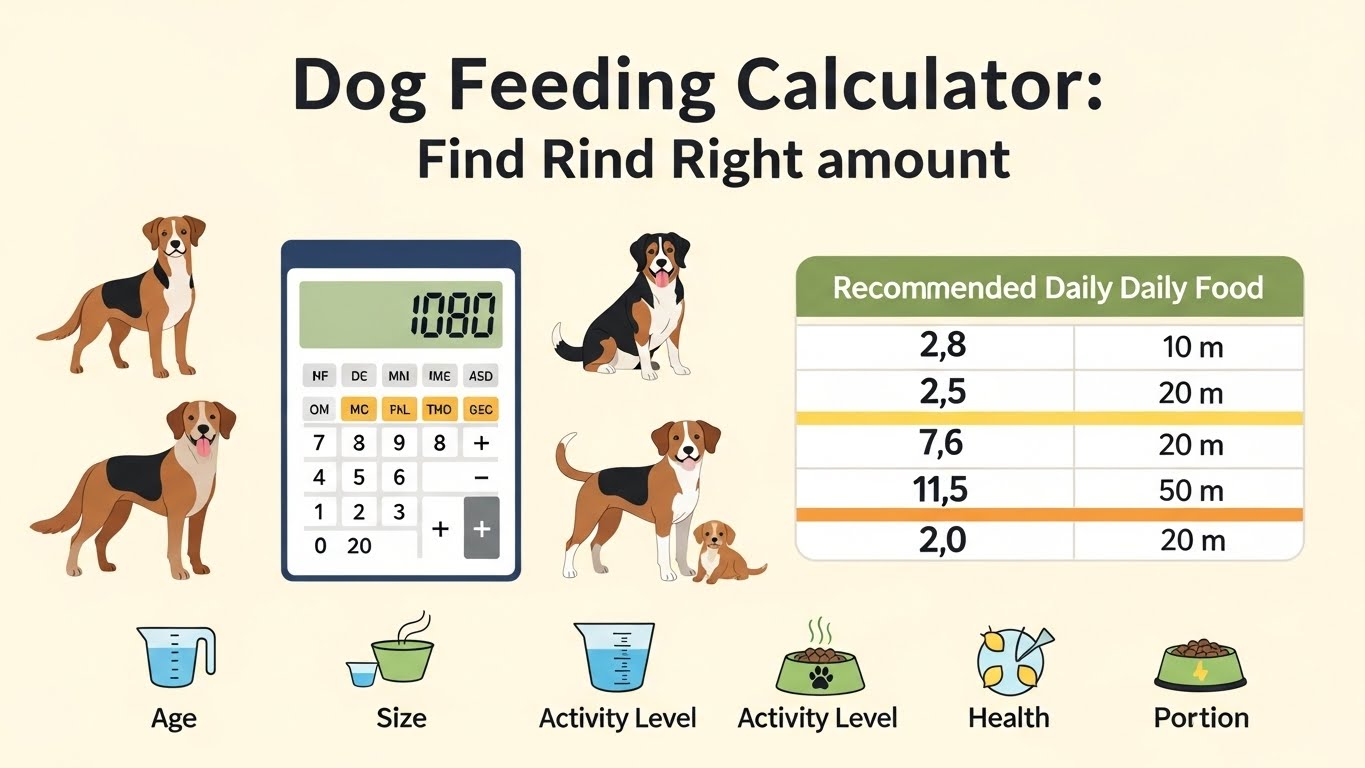
It can be overwhelming to determine how much to feed your dog, given the many variables to consider. Dog feeding calculators make this task easier by considering multiple factors simultaneously and providing individualised recommendations. I have applied these tools to my own dogs and in the guidance I offer to other pet owners.
They eliminate guesswork and can prevent the two most common types of feeding errors: excess feeding, which leads to obesity, and inadequate feeding, which leads to nutritional deficiencies. The same calculators take into account weight, age, activity level, and certain illnesses.
They are not flawless, but they provide a scientifically grounded starting point that is much more accurate than eyeballing portions or generic bag directions. Imagine them as nutritional GPS systems that point you in the right direction, but you may need to make slight adjustments based on real-life outcomes.
The Way Dog Feeding Calculators Work
Most feeding calculators are based on established formulas grounded in dog nutrition research. They typically begin with your dog's current weight or, if overweight, its ideal weight. The calculator then uses a metabolic energy requirement formula, generally expressed in calories per day.
The most common is the resting energy requirement, calculated as 70 times body weight (in kilograms) raised to the 0.75 power. This is multiplied by activity factors of 1.2 to 2.0, or by very active working-dog factors of 2.0 or more. I reviewed many calculators and concluded that the major ones differ only in minor variations of the underlying core algorithms.
Other sophisticated models also account for breed-specific metabolic rates, as a Basset Hound does not metabolise in the same way as a Greyhound. The calculator will then convert the total calories to cups or grams, depending on the caloric density of the food you enter via your dog food package.
What Information You'll Need
It is always good to gather relevant information before calculating dog feeding. You will require the current weight of your dog, preferably not an approximation, but the current weight of your dog at a veterinary hospital. Age is also critical, as puppies, adults, and seniors have very different needs. Get an honest evaluation of your dog's activity level.
This is the area where most owners go wrong. A 20-minute daily walk does not make your dog extremely active. The type is appropriate for dogs that run over a few miles, livestock herders, or dogs in training. You will also need the calorie content per cup or kilogram of your favourite dog food, typically displayed as kcal/cup in the guaranteed analysis section.
Other calculators ask about body condition score, reproductive status, and health conditions. I maintain a simple note on my phone with this information for each dog, and it is easy to recalculate when the diet changes or lifestyle alters.
Selecting the Right Calculator
Online, there are dozens of dog feeding calculators of varying sophistication and accuracy. I would choose calculators from veterinary schools, large veterinary organisations, or reputable pet nutrition companies rather than from generic pet blogs. The Ohio State University Veterinary Medical Centre offers a high-quality free calculator, as does the Pet Nutrition Alliance.
These scholarly materials revise their equations to align with existing studies. Calculators tailored to specific formulas are also available from some high-end dog food brands and can be helpful when using these products. This is why we avoid calculators that are overly simplistic and require only weight, without accounting for age or activity level.
The most effective calculators are written or use a range of numbers rather than a single value, and include disclaimers regarding the monitoring of body status. I usually calculate it using two different well-known calculators and cross-tabulate the results. If they are close, I have no hesitation in making the recommendation.
Correction of Growth and Puppies
Puppies also differ in feeding calculators because their needs change quickly. An ordinary adult calculator will severely starve a growing puppy. Puppy calculators account for the energy needs of growth, which may be twice or three times those of an adult dog per pound of body weight. The calculation varies based on current age and size at adulthood.
Puppies of small breeds are already at adult size at the age of 9-12 months, whereas giant dogs keep growing till 18-24 months. I have also worked with multiple litters and learned that calculator-based calculations are accurate at the start. Still, you will need to make adjustments weekly during periods of rapid growth.
Over 3-6 months, the number of portions required for puppies may vary every two weeks. Most calculators recommend dosages based on current weight, whereas a few require estimated adult weight, which is more useful in the long term. When your puppy is mature enough, always switch to adult formulas and recalculate portions.
Considering the Accuracy of Activity Levels
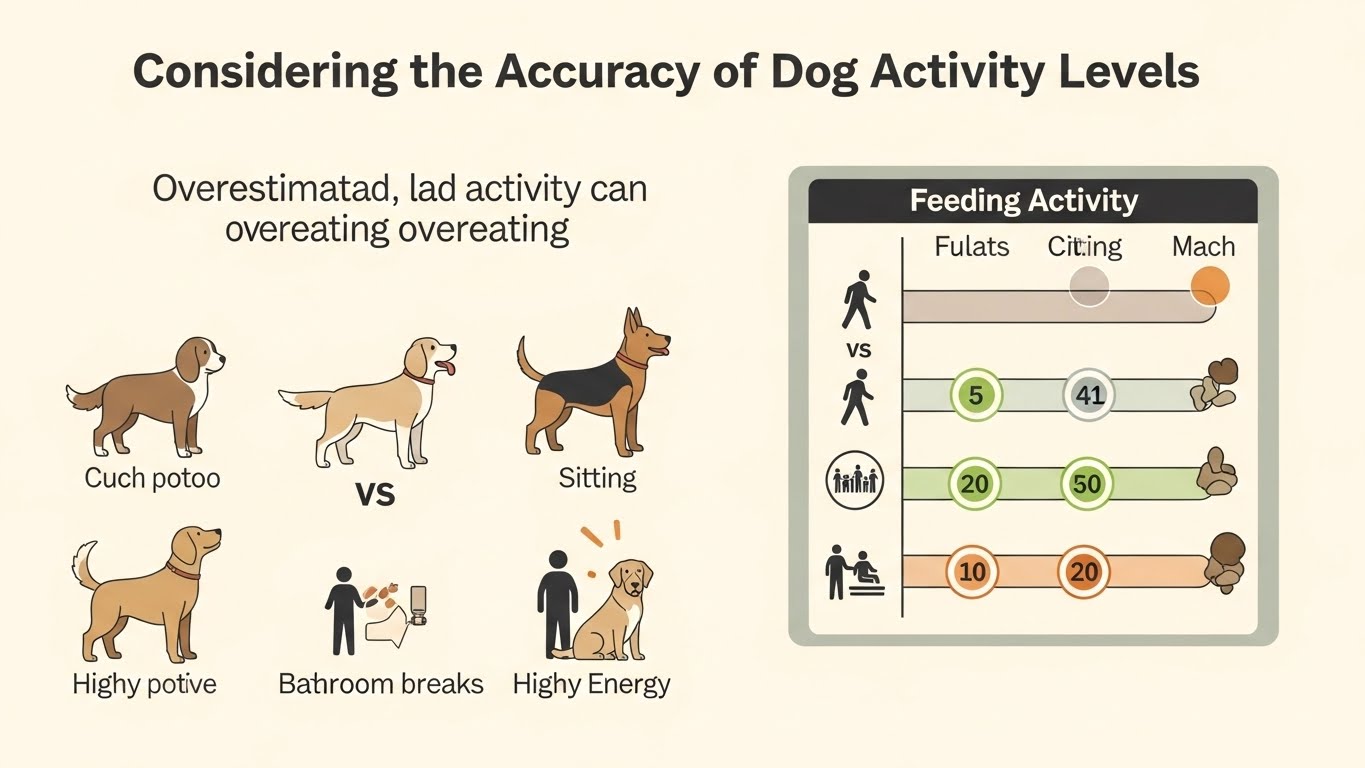
That is where integrity comes in. A majority of dog owners overestimate their pets' activity levels, leading to overeating. I have judged thousands of dogs whose owners chose active, but the dogs are either medium or even sleepy. An actual couch potato hardly has the time to exercise more than to go to the bathroom.
Moderate activity means 30-60 minutes of physical activity (e.g., walking or playing) per day. Active Dogs engage in 1-2 hours of intense activity, such as running, swimming, or rough play. Active/working dogs can engage in vigorous activities for several hours; these include police dogs, hunting dogs in season, and sledge dogs.
In cases of uncertainty, I begin with the lowest activity level and increase as needed if the dog goes out of shape. It is more convenient to put food on than to make an overweight dog acquire slenderness. Dogs that hike on Saturdays and sleep on weekdays are called weekend warriors and should be classified as not active but moderate.
Knowing the Calculator Limitations
Even the most efficient dog feeding calculators have limitations that should be understood. They provide averages relative to the average dog, but your dog may have a faster or slower metabolism. Certain breeds are metabolically thrifty and do not require as much food as calculators recommend. I have had good experiences with some Labrador Retrievers that grow fat on calculated amounts that would keep other dogs in good shape.
Calculators are not able to impose exceptional circumstances of health like hypothyroidism; this is severe in slowing down metabolism. They also expect that you are feeding on a regular, high-quality diet; switching to low-quality food while maintaining the same calorie intake would result in nutritional deficiencies.
Temperature matters too. Outdoor dogs in cold temperatures require many more calories than the calculator indicates. Calculators provide an informed starting point; however, the true answer to whether portions are appropriate comes only after weeks and months of observing your dog's condition.
Switching Foods with Calculators
To change dog food, one must recalculate because the calorie density varies widely across formulas. When I substituted a regular kibble with a grain-free version that had 350 calories per cup for a new one with 475 calories per cup, the daily food intake decreased to slightly more than 2 cups.
I would have been approximately 40 per cent overfed. Most calculators have an area to enter the calorie value of your food. This figure is displayed on the package, typically in the upper-right corner or in the nutrition section. Foods that include it list calories per kilogram, which must be converted to per-cup values.
The bag's cup weight should also be marked, typically 100-130 grams per cup, depending on the kibble's density. It is always necessary to recalculate when using dry, wet, or fresh food, as they contain widely different calorie content.
Treats and Extras Accounting
One of the greatest mistakes most owners make is forgetting that calculators can compute not only daily calorie intake but also meal-specific calories. All training treats, dental chews, veggies, and table scraps count toward the daily total; the occasional ones do as well. The veterinary instructions recommend that the treatment intake not exceed 10% of the daily intake.
When a calculator indicates that your dog should have 800 calorie/day, it means that you should have no more than 80 calories of extras. The main meal should account for 90 per cent of the total, with the remaining 10 per cent allocated to treats. A single bully stick has 100 or more calories, which is potentially the whole allowance of treats.
Other sophisticated calculators have calorie-tracking fields, and meal portions are automatically adjusted. In case yours does not, work it out by hand. I have seen cases where dogs that were at a healthy weight suddenly became overweight due to intensive training with treats without a corresponding reduction in feeding. Or rewarding treat consumption by either using the bits of everyday kibble as rewards or reducing dinner in proportion.
Evaluation and Revising Achievements
A feeding calculator provides a starting point; however, real-life monitoring is what will tell you whether it is accurate for your particular dog. I recommend weighing your dog monthly and evaluating body condition weekly. Once the calculator recommendations are complete, wait 3-4 weeks to see the changes, as weight changes are not noticeable immediately.
If your dog is slowly getting out of shape, with ribs showing, less energy, and a poorer coat, add 10 per cent and re-evaluate after 2 weeks. If your dog gains weight, reduce portions by 10-15 per cent. Some dogs stay within the amounts calculated to the dot, while others require 20 per cent or more in modifications compared to the calculator's output.
Make plain notes on weights, portion sizes, and body status. The information helps you identify trends and make informed decisions. When I went to a rescue with no known history, I started with calculator suggestions, dialled three times over two months, and eventually found the perfect amount.
Special Accommodations for Health Problems
Standard feeding calculators do not account for health conditions that affect nutritional requirements. Diabetic dogs should be fed appropriate portions at regular intervals, timed to match insulin administration. Your veterinarian may advise you to take large or small amounts that are not proportionate.
A hypothyroid dog requires approximately 20-30 per cent fewer calories than the calculator estimates based on its weight, as this hormone regulates metabolism. Low-protein foods are also provided to dogs with kidney disease in varying calorie levels. Cancer patients sometimes require increased calories to avoid weight loss in the process of treatment.
Pregnant and lactating dogs require much more food, with increases of up to 50 per cent during peak lactation, well beyond normal feeding levels. I would never use a calculator alone and leave out your veterinarian when your dog is diagnosed with health conditions. Some veterinary hospitals use specialised calculators that account for specific situations and can provide more accurate advice than generic online tools.
Switching to Feeding with Calculators
When you have been feeding by guesswork or outdated methods, it takes a calculated shift to portions calculated with a calculator. Never make radical changes at once, because this may produce stomach upsets and anxiety. The first time I used a calculator to estimate how much free food a dog I had been feeding would eat, the result was 40 per cent less than her actual diet.
I minimised the portions by cutting 10 per cent every few days over two weeks until I reached the target. You can observe your dog's behaviour during the transition. A little hunger is not bad if you have been overfeeding; it is the begging, listlessness, or evident weakness that indicates you have over-reduced.
On the other hand, if increasing food intake is calculated, it must be done slowly to avoid upsetting the stomach. Maintain the same feeding schedule: if your dog typically eats twice a day, continue that habit but adjust the portions. Within a week or two, most dogs will get used to it, and you will be able to benefit from the right food proportions and meet their real needs.
Frequently Asked Questions
Is the dog-feeding calculator accurate?
They offer scientifically supported initial positions but must be adjusted individually. Typical dogs have accurate results in most calculators, with 10-20 per cent accuracy, but metabolism varies. Check your dog's body condition and make adjustments as needed.
What is the frequency of using a feeding calculator?
Recalculate when changing foods, when there is a significant weight change, when the activity level is altered and when your dog is old. As they grow, puppies must be recalculated monthly. Adults should be reassessed every 6-12 months.
Is it possible to use the same calculator when dealing with puppies and adults?
No, puppies need different kinds of calculators that take into account growth and energy. Growing dogs will be fed considerably by adult calculators. Calculators of the sort you will always want to use are those that are specific to a puppy until your dog is mature enough in their breed size.
What can be done with the results of the calculators that are too high or too low?
First, trust the calculator but observe. Dogs do not have their average metabolic rates. Begin with recommendations, and adjust in 10% increments based on actual changes in body condition over several weeks.
Are feeding calculators practical with homemade dog food?
Yes; however, you will be required to provide accurate calorie information for your recipes. This involves calculating ingredient calories or consulting canine nutritionists. Most calculators allow users to enter custom calorie-per-cup values for any type of food.
Calculate Your Dog's Perfect Feeding Amount
Use our comprehensive dog feeding calculator to determine the right portion size for your pet's optimal health and nutrition.
Try Our Calculators