Dog Age in Human Years: What Science Tells Us
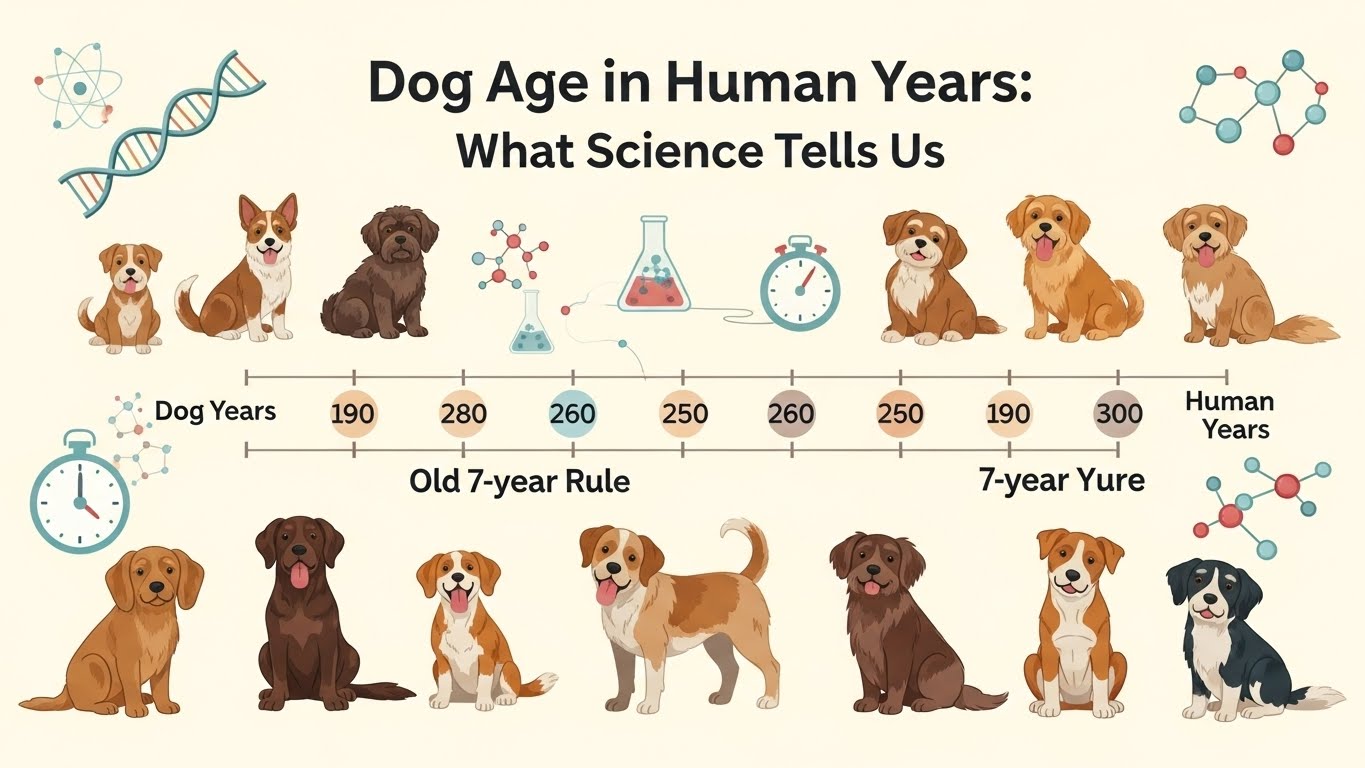
For seventy years, we've relied on the same old principle: multiplying your dog's age by seven to determine their human age. I recall performing this computation as a small child with my family's Golden Retriever and being proud that I could quickly determine she was 49 years old. However, this formula is fundamentally flawed, as I've learned through almost twenty years working with veterinary medicine specialists and raising several dogs of various breeds.
Why the 7-Year Rule Doesn't Work
The seven-year rule was developed through simple mathematics, not biological science. Someone found that human beings had a lifespan of about 70 years, compared with the 10-year average in dogs, and the equation seemed valid. But anyone who has ever seen a puppy grow knows there is something wrong with this reckoning.
By one year of age, most dogs are capable of reproduction and are nearly fully mature physically. A seven-year-old human child is nowhere near puberty. This comparison collapses as soon as you consider real developmental milestones. Dogs grow rapidly in the early stages of development and then age differently based on each dog's breed, size, and genetics.
How Dogs Actually Age
Ageing in dogs occurs in stages that do not align with human stages. The first year of a puppy's life is a period of rapid growth, during which they undergo physical and neurological transformations much like human adolescence and early adulthood combined.
I have been able to see eight-week-old puppies become completely coordinated, personality-filled dogs within six months, a developmental leap no human infant could achieve. In the second year, the ageing process continues rapidly but then slows down. After age 2, the ageing process differs markedly depending on size, as cellular ageing accelerates in large breeds more than in small ones.
The Most Important First Two Years
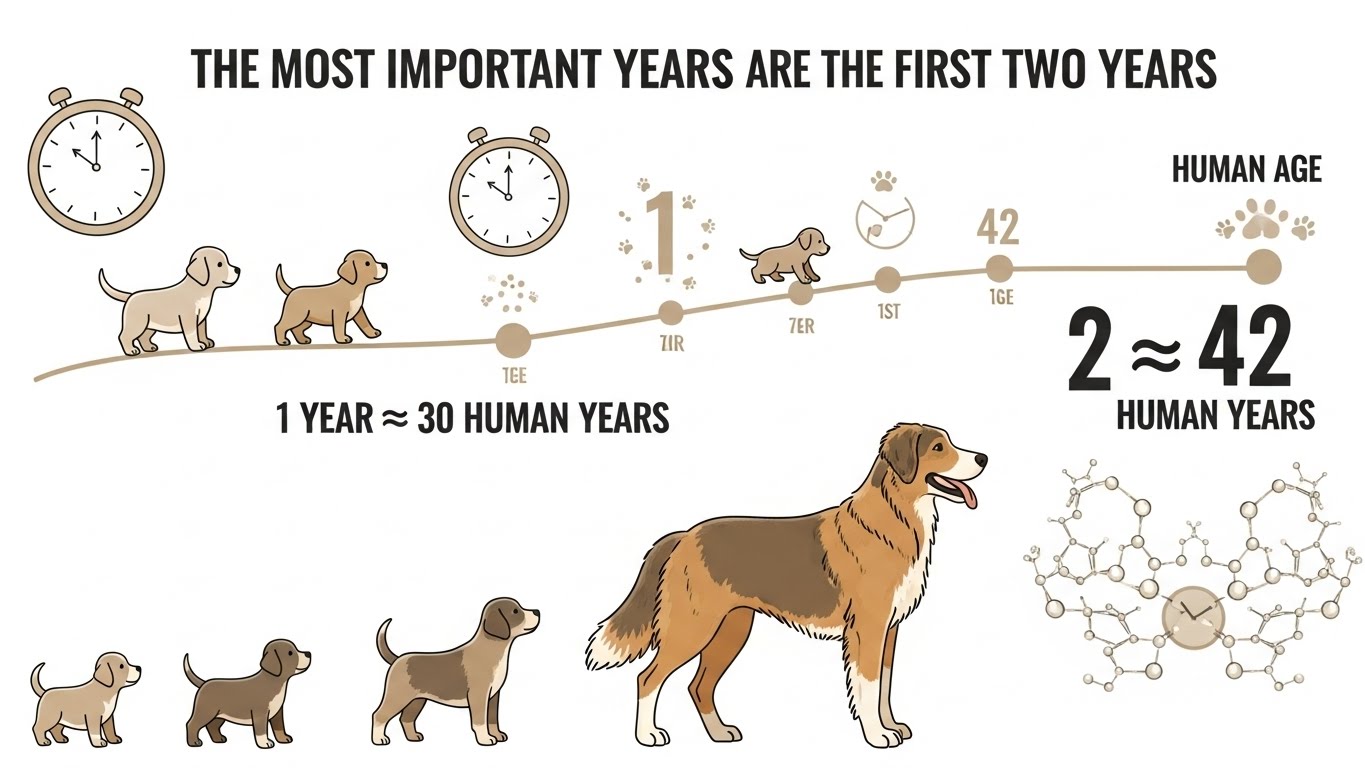
The most significant period of ageing is the first year of a dog's life. Research has found that a one-year-old dog is approximately at the same biological maturity as a 30-year-old human being. In their second year, most dogs reach approximately 42 human years of age.
That is why behavioral problems frequently arise between 6-18 months - your adorable puppy is essentially a teenager. I have helped thousands of dog owners navigate this difficult period, and understanding how quickly a dog develops helps explain the sudden reluctance or boundary-pushing that comes so unexpectedly.
The Size Factor of Canine Ageing
Breed size is a contributing factor that significantly affects how to calculate a dog's age in human years. Small dogs have longer lifespans and slower rates of ageing than large dogs once they mature. A Chihuahua may live 16-18 years, while a Great Dane may live no longer than 8-10 years.
This negative correlation between size and longevity is puzzling to researchers because, in most species, larger individuals tend to live longer than smaller ones. Elephants live longer than mice. However, with dogs, selective breeding has produced both extremes of size, with unanticipated effects on ageing and longevity.
Large Breeds Age Faster
Giant breeds have a faster ageing process, which becomes evident during middle age. A five-year-old Mastiff exhibits grey hair, joint stiffness, and low energy that may not be evident in a five-year-old Pomeranian until much later in life.
I have witnessed this in dog parks many times, when big-breed owners lament their aging six-year-olds while small-breed owners talk of their energetic eight-year-olds as young. The cellular processes that support this include growth hormones and metabolism; larger dogs essentially expend their biological resources at an accelerated rate.
Contemporary Scientific Knowledge
Recent DNA methylation research at UC San Diego has yielded a breakthrough in understanding dog age in human years. Scientists investigated epigenetic changes that are predictable during organismal ageing. These changes leave traces in DNA that serve as a biological clock.
The study developed a logarithmic equation that predicts dog ageing relative to human ageing with greater precision than previous methods. The results are complex mathematically, but they confirm what all dog owners have long known: the seven-year rule does not accurately reflect how our companions age.
The New Formula Explained
The empirically derived formula is: human age = 16 ln(dog age) + 31, where ln denotes the natural logarithm. Most people will not calculate this by hand; therefore, many online tools today utilize such findings. The lesson is simple: dogs age rapidly in early life, followed by a moderation of the rate.
A medium-sized dog at age two is roughly the same age as a 42-year-old person, after which it ages about 4-5 human years per dog year. This varies by breed size, with small breeds aging more slowly, whereas large breeds age faster once mature.
Applied Recommendations for Dog Owners
Knowledge of your dog's actual biological age affects healthcare decision-making. Veterinarians recommend wellness checks according to life stages rather than calendar age. The health checks that a seven-year-old Labrador requires are different from those for a seven-year-old Yorkshire Terrier, since the latter may not need such checks for several more years.
I've modified my dogs' care routines based on age assessment - earlier joint supplements for my larger breed and longer active playtime for my small terrier, who was biologically younger at the same calendar age.
Adaptations of Exercise and Activity
Matching exercise to your dog's biological age helps avoid overwork and lack of stimulation. Some owners regard their older small breeds as delicate elderly individuals, yet they still have many years of active life ahead.
Conversely, I have seen individuals overwork their aging large-breed dogs when they are only four years old, not realizing their dog is middle-aged. Physical symptoms are more important than numbers; pay attention to decreased stamina, reluctance to jump, or stiffness. These are signs your dog is aging, regardless of any formula.
Nutrition Throughout Life Stages
The dietary requirements of a dog change with life stages, and determining dog age in human years helps identify when these transitions should occur. Puppy food promotes rapid growth; adult diets maintain health in prime years; and senior foods address metabolic and physiological changes.
These transitions are determined by breed size. I switched my German Shepherd to senior food at age seven, but my Dachshund remained on adult formula until age ten. Commercial pet food companies offer guidelines; however, individual evaluation using biological, not calendar, age yields better results.
Senior dogs, regardless of breed, benefit from joint-supporting nutrients, protein-adjusted levels, and altered caloric content to prevent obesity. When I tell clients that their dog is roughly equivalent to a 65-year-old human, they immediately understand why arthritis medication and gentler exercise make sense.
Medical Examination and Prevention
Modern veterinary care has adopted life-stage-specific care plans instead of the traditional seven-year formula. Blood panels, dental care, cancer screenings, and organ function tests are suggested at various intervals based on your dog's size and calculated human-equivalent age.
Large-breed dogs should begin senior health checks at approximately 5-6 years, whereas small-breed dogs may delay until 10-12 years. Timely diagnosis of age-related diseases makes a significant difference, and precise age assessment is lifesaving.
No formula perfectly predicts how your particular dog will age. Genetics, food quality, physical activity, access to veterinary services, and even mental stimulation determine the rate of ageing. Age calculations are general guidelines; pay attention to your dog's specific condition for accurate responses regarding health status and needs.
Making Every Year Count
However you calculate dog age in human years, the point remains the same: our companions are aging faster than we are, and they have limited time with us. Knowledge of their biological age helps us provide appropriate care at their respective life stages.
I use annual evaluations, honest monitoring of physical signs, and frequent veterinary checkups. As my dogs began to grey at the muzzle and lose some morning enthusiasm, I didn't need calculations to see they were aging - but knowing their approximate human-equivalent age helped me adjust our routines appropriately.
FAQs
What is the exact way to determine a dog's age in human years?
The most accurate formula is a logarithmic formula based on DNA research. Practically, use breed size to estimate: first year = about 15 human years, second year = 9 years, and thereafter 4-6 years depending on size.
Are there differences in ageing between mixed-breed dogs and purebreds?
Mixed breeds may have genetic diversity that confers an advantage, potentially aging more slowly than purebreds vulnerable to hereditary diseases. However, the rate of ageing remains largely dependent on size.
At what age is a dog described as senior?
Small breeds typically reach senior age at 10-12 years, medium breeds at 8-10 years, large breeds at 6-8 years, and giant breeds at 5-6 years.
Does neutering or spaying influence the ageing of dogs?
Altered dogs may live slightly longer due to reduced susceptibility to certain diseases, although hormonal variations can affect specific ageing processes. Overall health benefits outweigh any minor effects on ageing.
Why do small dogs live longer compared to big dogs?
Researchers believe the rapid growth of large breeds accelerates cellular ageing and increases cancer risk. Smaller dogs experience less biological stress during growth and tend to develop age-related conditions later.
Ready to Calculate Your Dog's Age in Human Years?
Use our scientifically-based calculator to discover your dog's true biological age and provide better care at every life stage.
Try Our Calculator